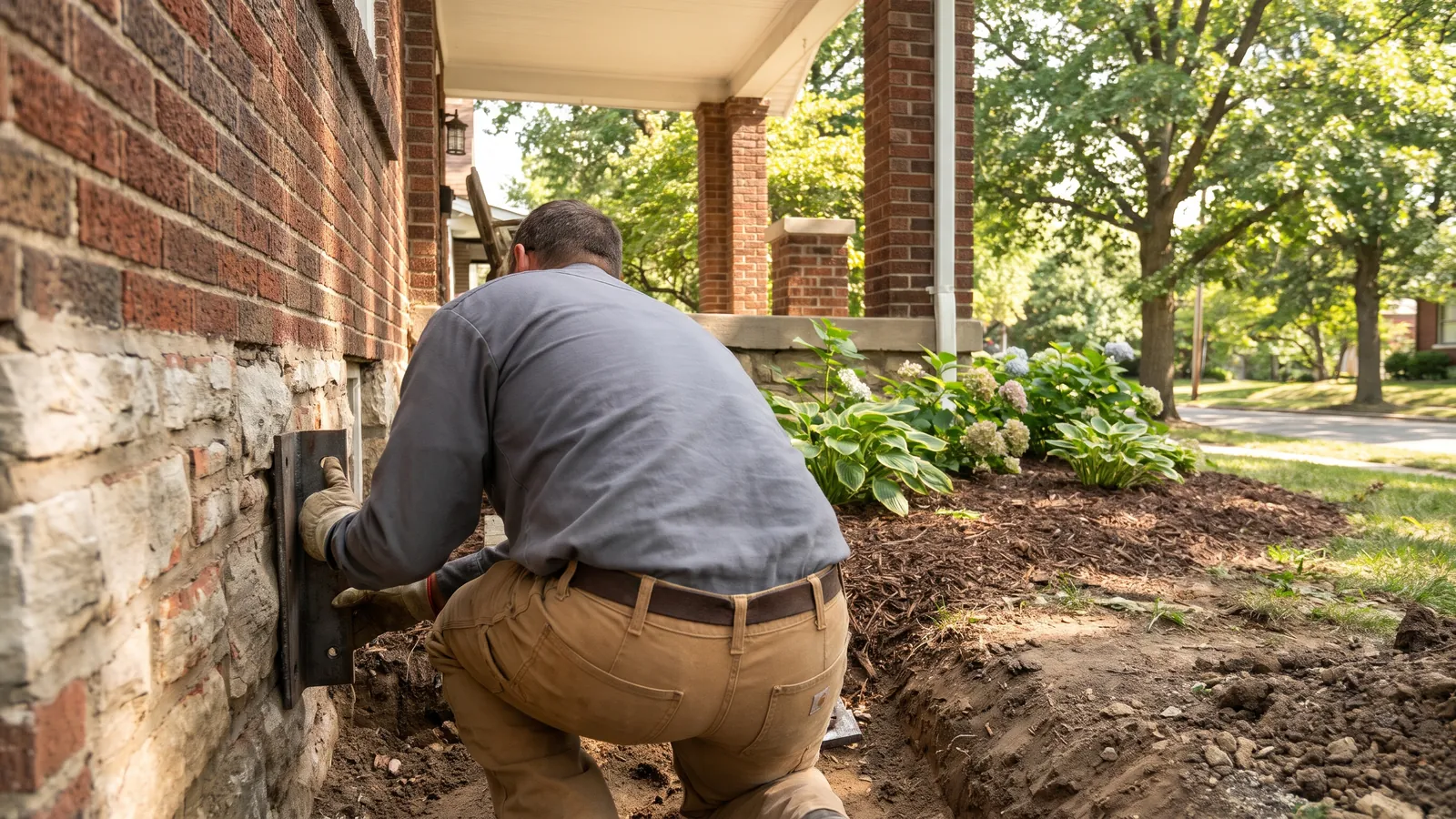
Foundation repair for houses built on Kansas City clay.
Cracked basement walls, bowing block, settling corners, wet floors and sinking steps, on bungalows in Brookside and Waldo and on split-levels in Overland Park alike. We measure first, explain what the soil is doing to the house, and hand you a written scope and price before any digging starts.
- Free inspection
- Written price first
- Fully insured crews
- Permits pulled
Ten kinds of work, one question behind all of them: what is the ground doing?
Most foundation calls in the metro trace back to water and clay. We match the repair to the cause, so a leaking crack gets sealed, a sinking corner gets piers, and a wall pushed in by wet soil gets braced and drained.
The common soils under the metro run 60 to 80 percent clay, they soak up roughly 40 inches of rain a year with the heaviest storms from March through June, and then bake under 90-degree July afternoons. That swing is why foundations here move, and why we look at drainage on every job.
What Kansas City homeowners ask us first
Short answers to the questions that come up on nearly every inspection. The full FAQ covers piers, permits, timelines and selling a house with a repair.
Read all the answersIs every crack in a Kansas City basement a problem?
No. Poured walls shrink as they cure, and thin vertical hairlines that stay dry are common in houses here. What earns a closer look is a crack wider than a credit card, one that is wider at the top than the bottom, a horizontal crack in a block wall, a stair-step crack through the mortar, or any crack that lets water in. Our free inspection measures it and tells you which kind you have.
Why do so many homes here have foundation trouble?
The metro sits on heavy, expansive clay, the Shawnee and Grundy clays and the Wymore-Ladoga soils, which are mostly montmorillonite. That clay swells when spring storms soak it and shrinks hard in a dry July and August, so the ground under a footing moves every year. Freeze-thaw in winter adds another push. Houses built in the 1950s and 60s on poorly compacted fill tend to show it first.
Does homeowners insurance pay for foundation repair?
Usually not. Most policies exclude settlement, earth movement and gradual seepage. Coverage sometimes applies when a sudden covered event, like a burst supply line under the slab, caused the damage. We document what we find in writing so you can ask your agent, but we never tell anyone a claim will be paid.
Do you work on the Kansas side?
Yes. We cover Overland Park, Shawnee, Lenexa, Leawood, Prairie Village and Merriam as well as Kansas City, Independence, Lee's Summit, Blue Springs, Liberty, Gladstone, Raytown, Grandview and Belton on the Missouri side. Each city issues its own permits, and we pull the one your job needs.
Is the phone really answered at night?
Yes. Our automated receptionist takes every call, day or weekend, writes down what is happening and where, and the team calls back to set the visit. If water is coming in or a wall has moved suddenly, say so and the callback is moved up.
Know the range before anyone quotes you
Foundation work is priced by the pier, the strap, the linear foot of drain or the square foot of slab. These guides lay out the planning ranges we see across the metro, what moves a price up or down, and how to read the signs in your own house first.
All the guides- Foundation repair cost in Kansas CityPiers, straps, anchors
- Basement waterproofing costDrains, pumps, membranes
- Signs your foundation is movingCracks, doors, floors
- How clay soil moves a houseSwell, shrink, repeat
- Waterproofing methods comparedInside, outside, both
- Permits on both sides of State LineWho issues what
We work across a metro of about 2.27 million people in two states, from Kansas City's own 510,000 residents out to Lee's Summit, Blue Springs and Overland Park, where roughly seven in ten homes are lived in by the people who own them.
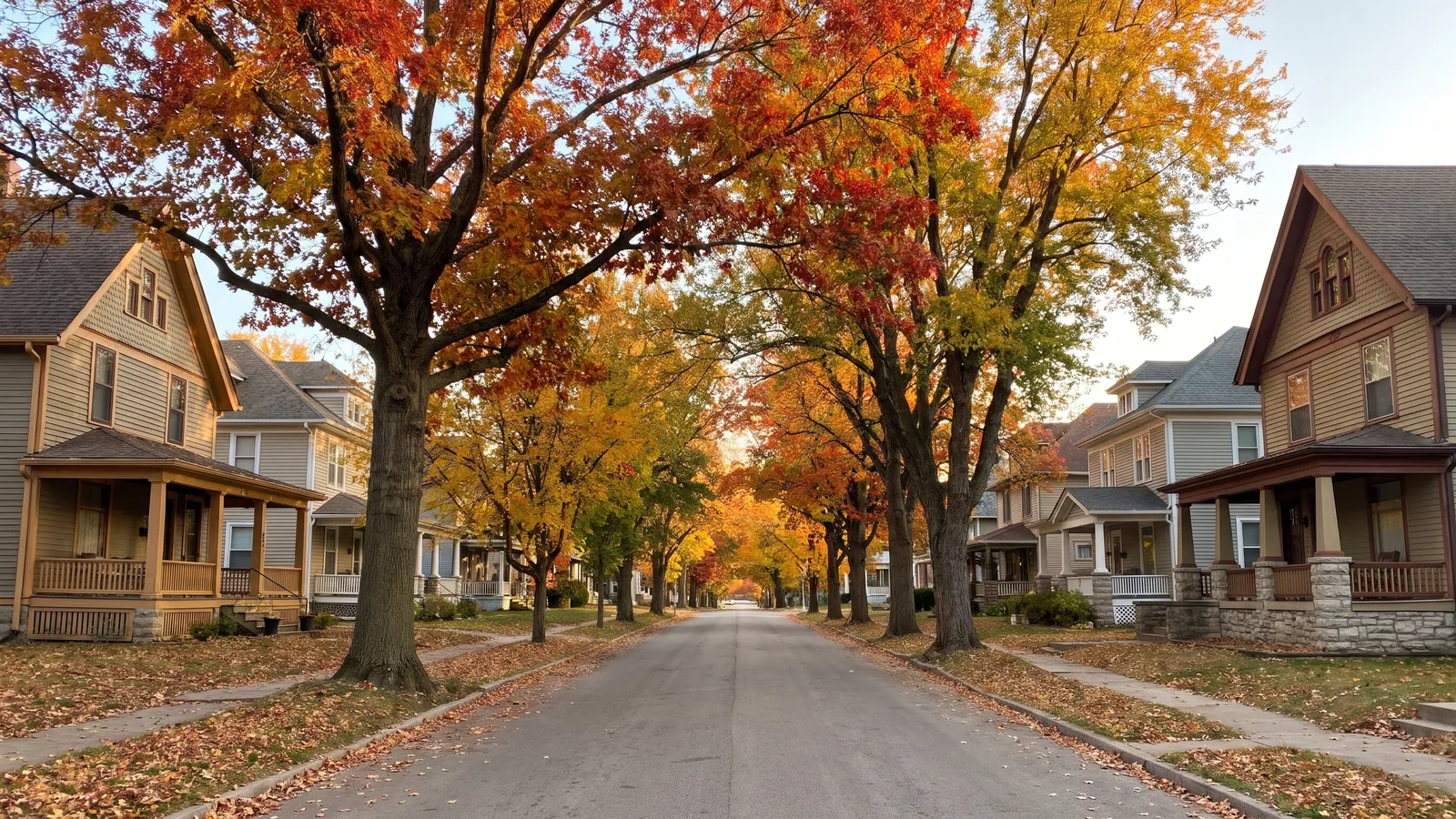
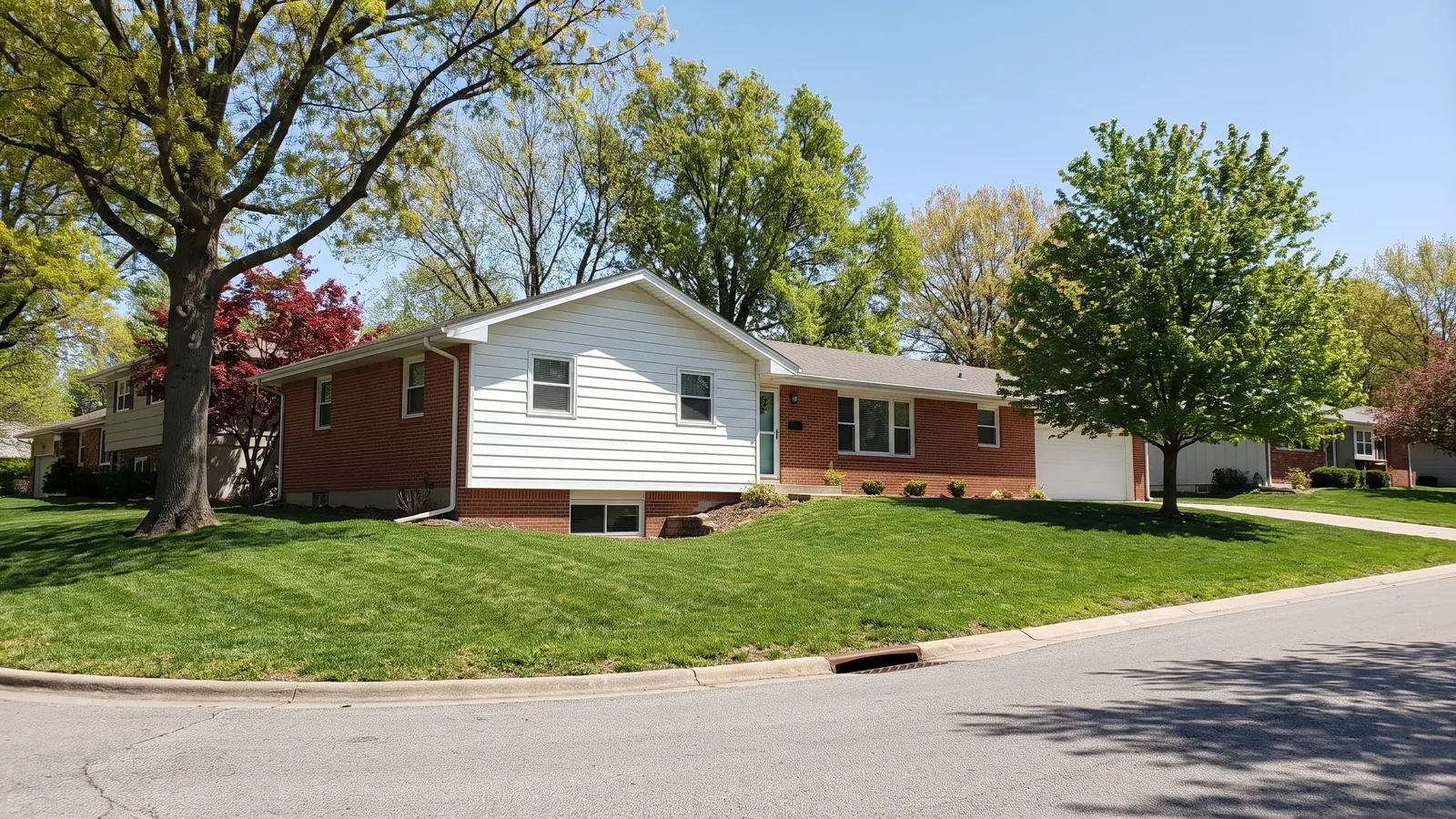
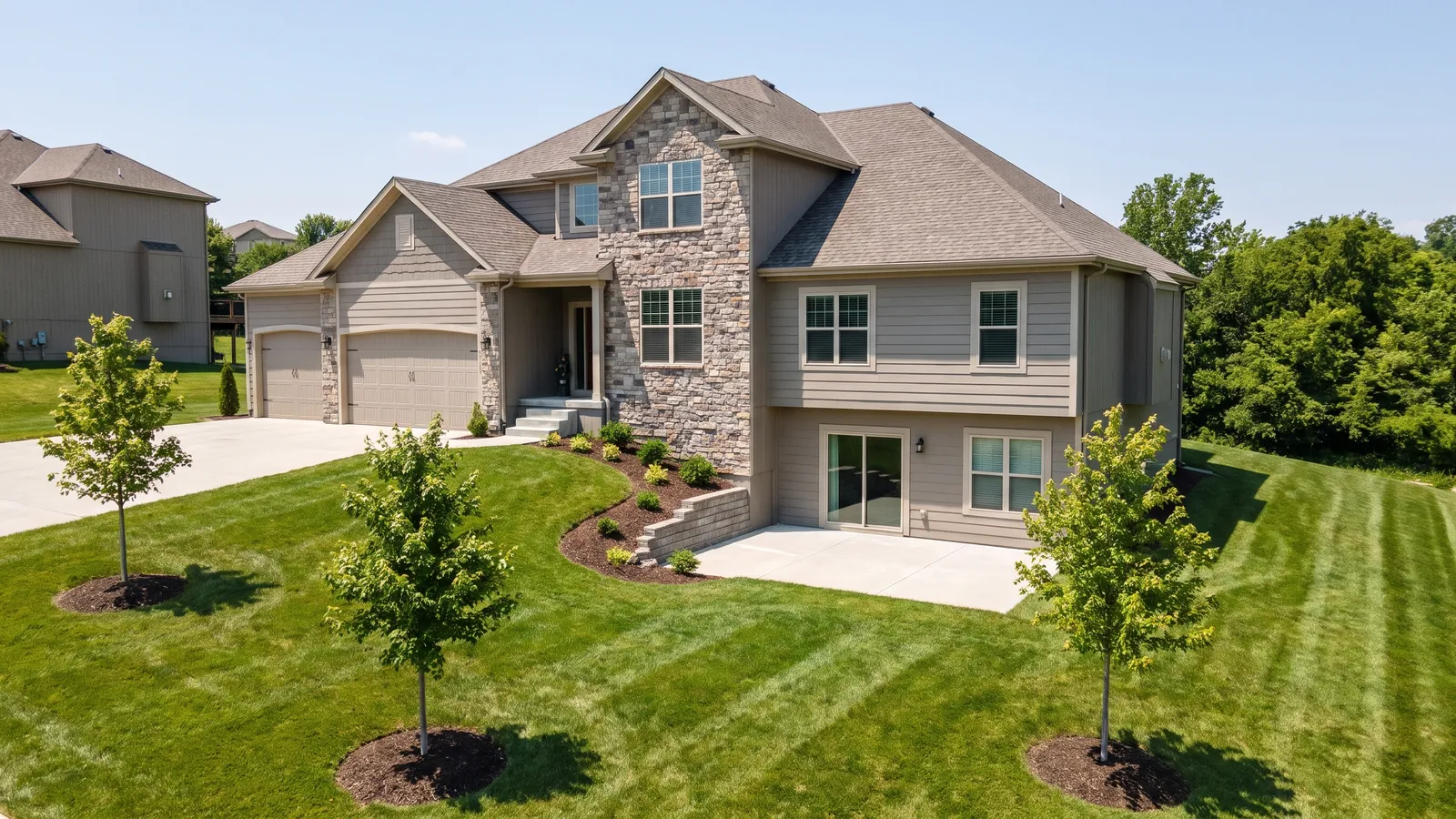
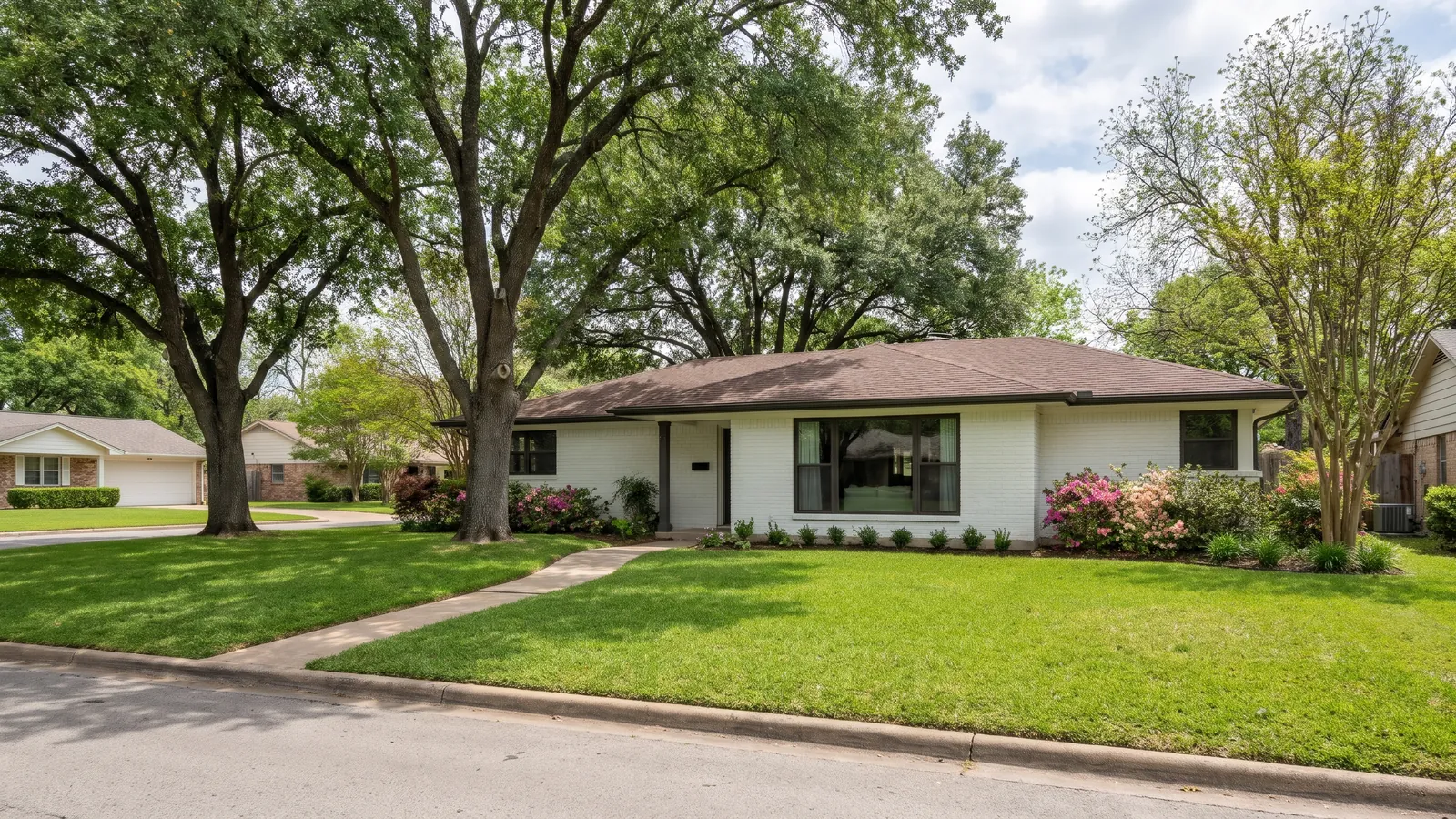
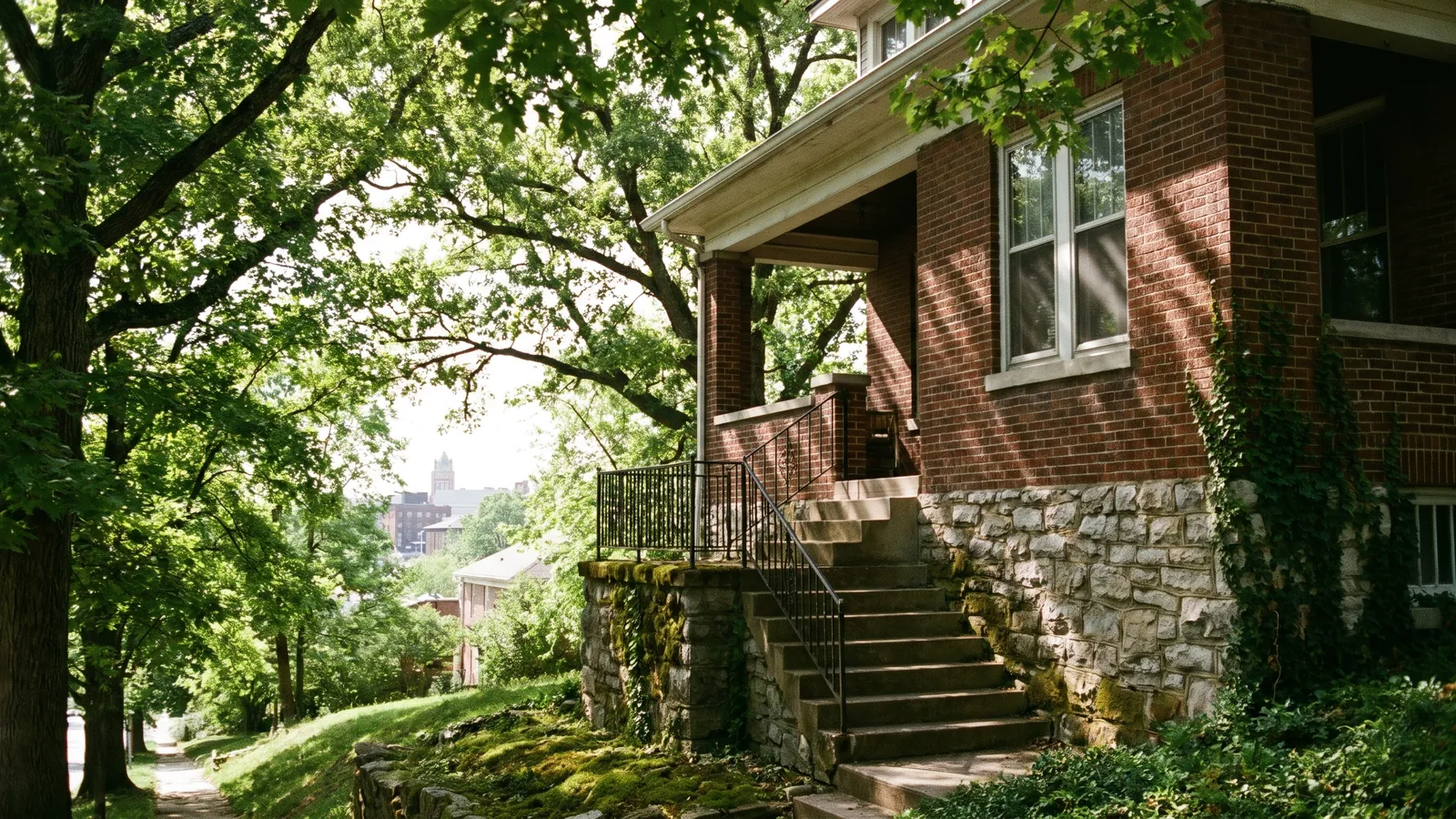
Brick bungalows, split-levels and new walkouts, on both sides of State Line
The older neighborhoods in the city, Brookside, Waldo, Midtown and the Northeast, have the oldest foundations and the most repairs. The southern suburbs are newer, but Lee's Summit, Raymore and Belton were built on the same expansive clay.
Measured, explained, priced in writing
Foundation repair is expensive and hard to undo, so we treat the first visit as the most important one. Nobody should sign for ten piers on a guess.
- We find the cause, not just the crackGutters, grading, downspouts and the soil type get checked along with the wall, because water is behind most of what we see.
- You see the measurementsFloor elevations, crack widths and wall deflection are written down, so the repair plan has numbers behind it.
- The price comes firstA written scope with every pier, strap or foot of drain listed, before any work and with no pressure to sign that day.
- Honest about insurance and permitsWe tell you plainly that settlement is rarely covered, and we pull the permit your city requires.