Gravel, pipe and slope: the simplest way to move water off a clay lot
A French drain is a trench of clean gravel around a perforated pipe, sloped so water that finds it runs to a safe outlet. On clay lots in the metro it is the tool that catches water before it reaches the foundation, or catches it at the footing once it does.
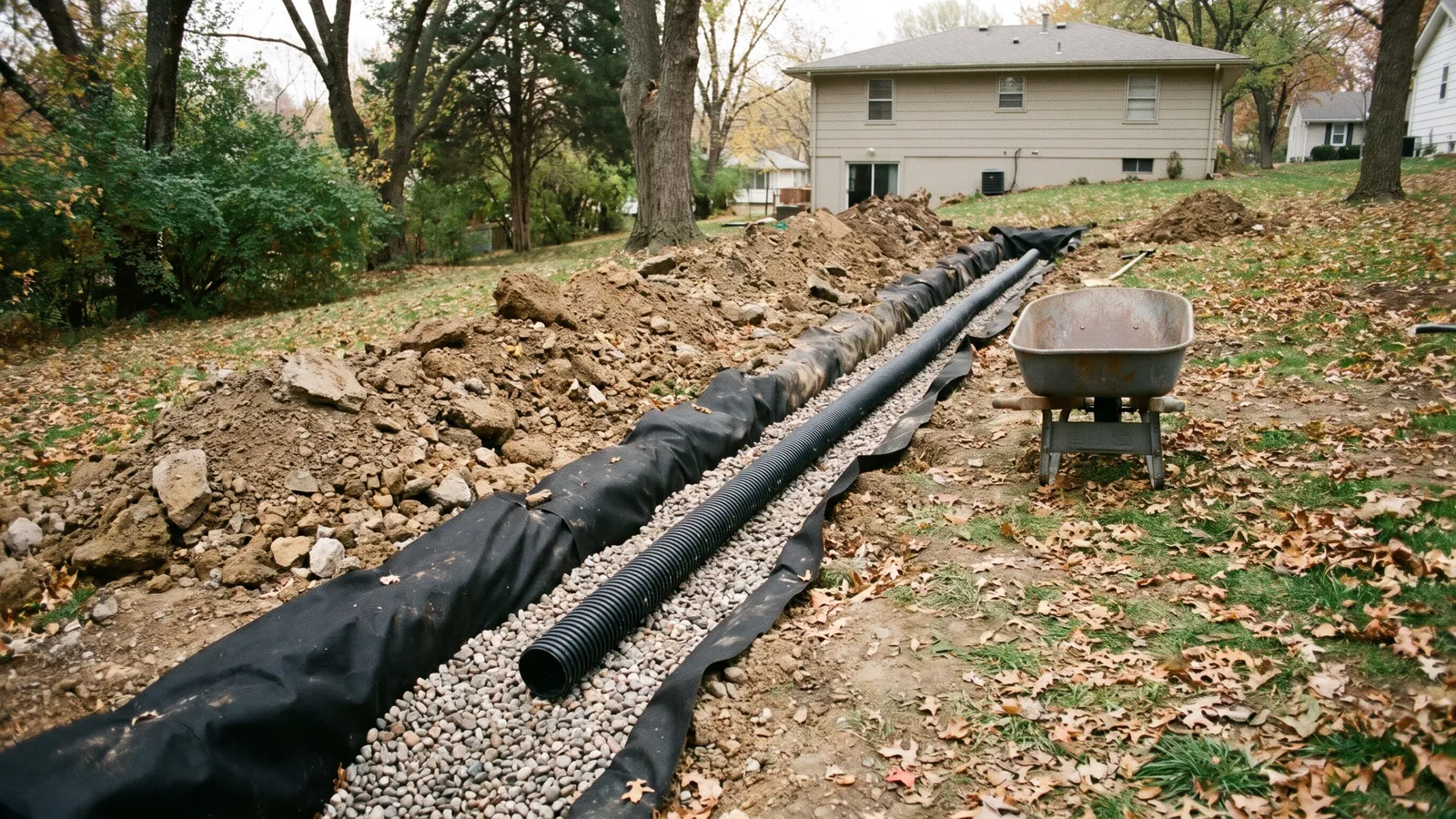
Water follows the easiest path. On a lot with heavy clay, that path is usually across the surface and toward the lowest point, which on too many houses is the foundation. A French drain gives it a better option: a trench lined with filter fabric, a bed of washed gravel, perforated pipe laid with a steady fall, more gravel on top, and the fabric folded over to keep the soil out. Water seeps into the gravel faster than it can soak into the clay, enters the pipe, and flows to an outlet.
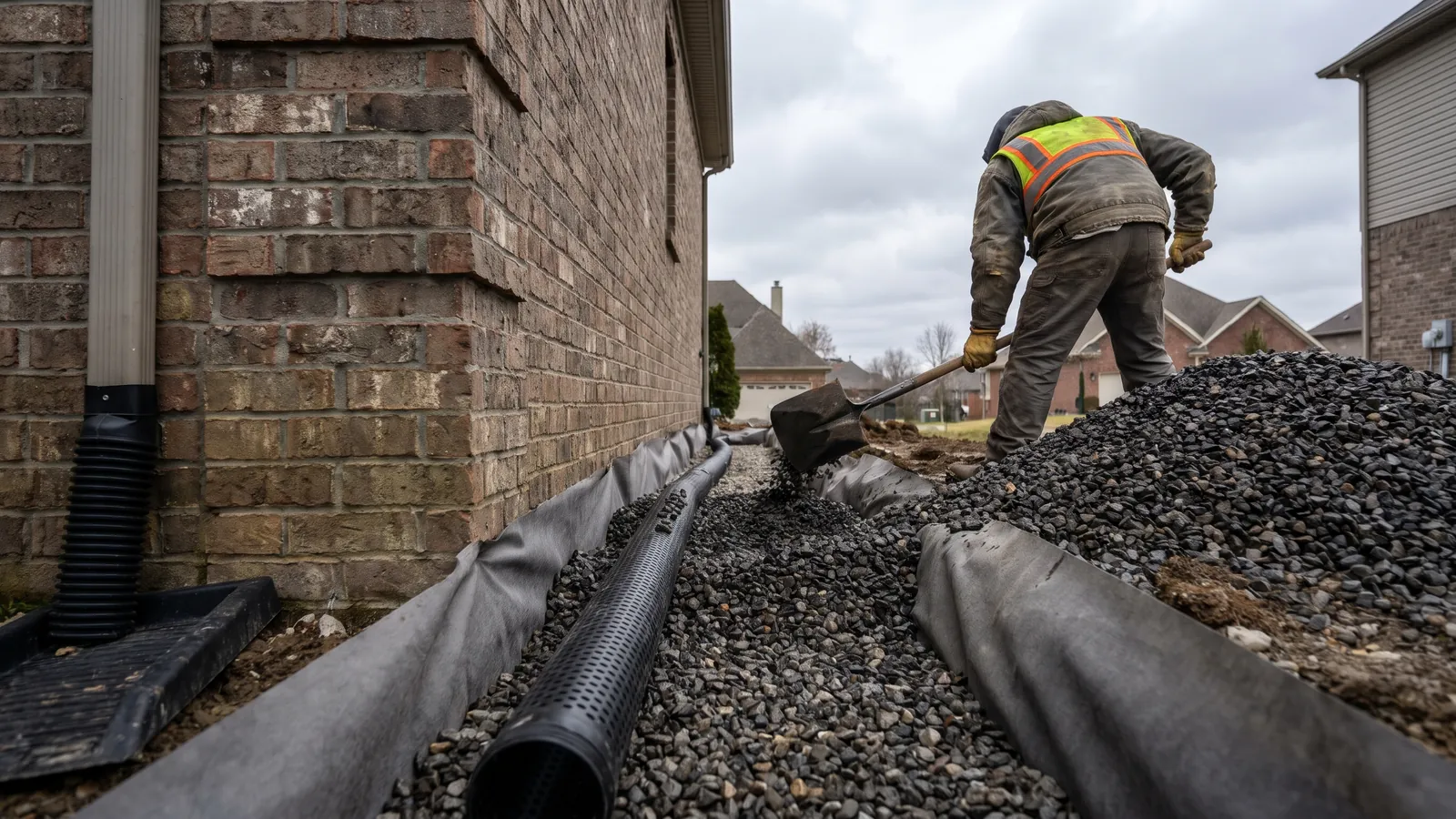
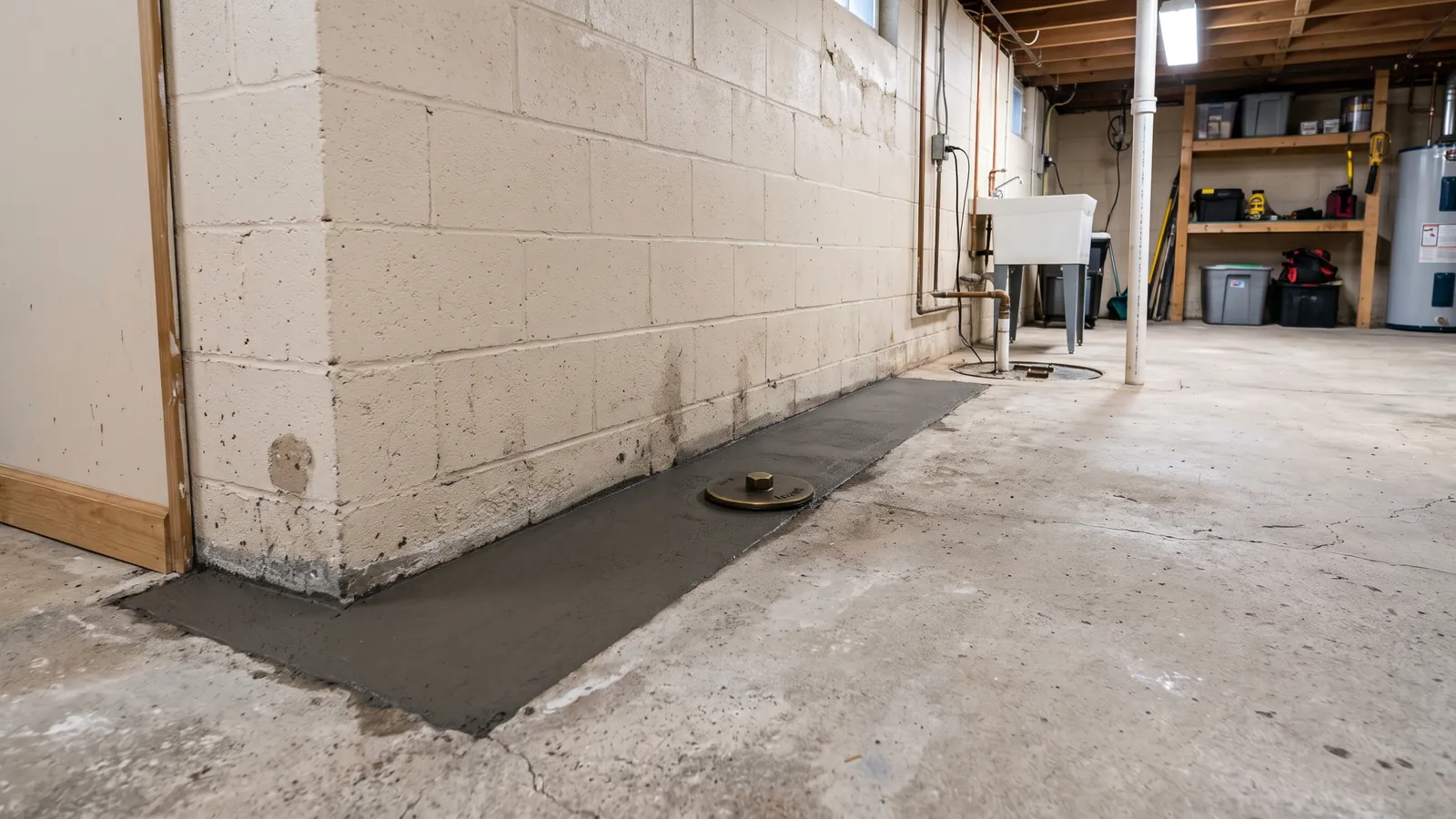
We install three kinds. A yard drain runs across a slope uphill of the house, catching surface and shallow ground water before it reaches the foundation, and discharges to the curb, a dry well or a lower part of the yard. A footing drain runs along the outside of the foundation at footing depth, usually as part of exterior waterproofing, and relieves the pressure against the wall. An interior drain, sometimes called drain tile, runs inside the basement beside the footing and carries water to a sump pump.
The detail that decides whether a drain works for years or silts up in two is the outlet. A drain has to go somewhere lower, and it has to be kept clear. We plan the route and the fall before we dig, add a cleanout so the line can be flushed, and make sure the water doesn't end up on a neighbor's lot or across a sidewalk where it freezes in January. Where the yard has no lower point, the drain feeds a sump and pump instead.
Utilities are marked before any trench is dug, and the sod is cut and set aside so the lawn can go back down over the top.
What the work includes
Route and fall planned
Where water comes from, where it can go, and enough slope to get it there, laid out before digging.
Fabric, gravel and pipe
Filter fabric to keep the clay out, washed gravel, perforated pipe set with a steady fall.
Proper outlet
To the curb, a dry well, a lower part of the yard or a sump, never onto a neighbor's lot.
Cleanouts
Access points so the line can be flushed if it ever slows.
Utilities marked
Locates requested before any digging.
Lawn put back
Sod set aside and relaid, or the trench seeded, depending on the yard.
What french drains costs in Kansas City
| Item | Planning range | What moves it |
|---|---|---|
| Exterior yard drain, per linear foot | $35 – $75 | Depth, length, rock, outlet distance |
| Typical backyard drain, 60 to 100 feet | $3,000 – $7,000 | Route and outlet |
| Footing drain with exterior waterproofing | Part of the excavation price | See waterproofing |
| Interior drain tile, per linear foot | $65 – $110 | Includes concrete restoration |
| Dry well or pop-up outlet | $400 – $1,500 | Size and distance |
These are planning ranges for the Kansas City metro, not quotes. Your price is written after the free inspection, line by line, and nothing starts until you approve it.
On the job
Common questions
Does a French drain work in clay?
Yes, as long as it has a real outlet. The gravel collects water faster than clay can absorb it, so the drain intercepts it. Without an outlet, a drain in clay just fills up.
How deep should a yard drain be?
Usually 18 to 24 inches for surface and shallow water, deeper when it has to intercept water before it reaches a basement wall. We set the depth by what it needs to catch.
Will a drain clog?
Fabric around the gravel keeps clay out, and a cleanout lets the line be flushed. Most problems come from drains built without fabric or with too little slope.
Can you connect downspouts to it?
We usually keep downspouts on their own solid pipe, because roof water arrives fast and can overwhelm a perforated drain. They can share an outlet.
Do I need a permit for a yard drain?
Generally not for drainage on your own lot, but some cities have rules about where discharge can go. We check.