A dry basement in a city of clay is a drainage problem, solved on purpose
Water reaches a basement in a handful of ways: through cracks, over the top of the footing, up through the joint where wall meets floor, and through porous block. The fix is to give it an easier path than your basement, and to keep less of it near the house to begin with.
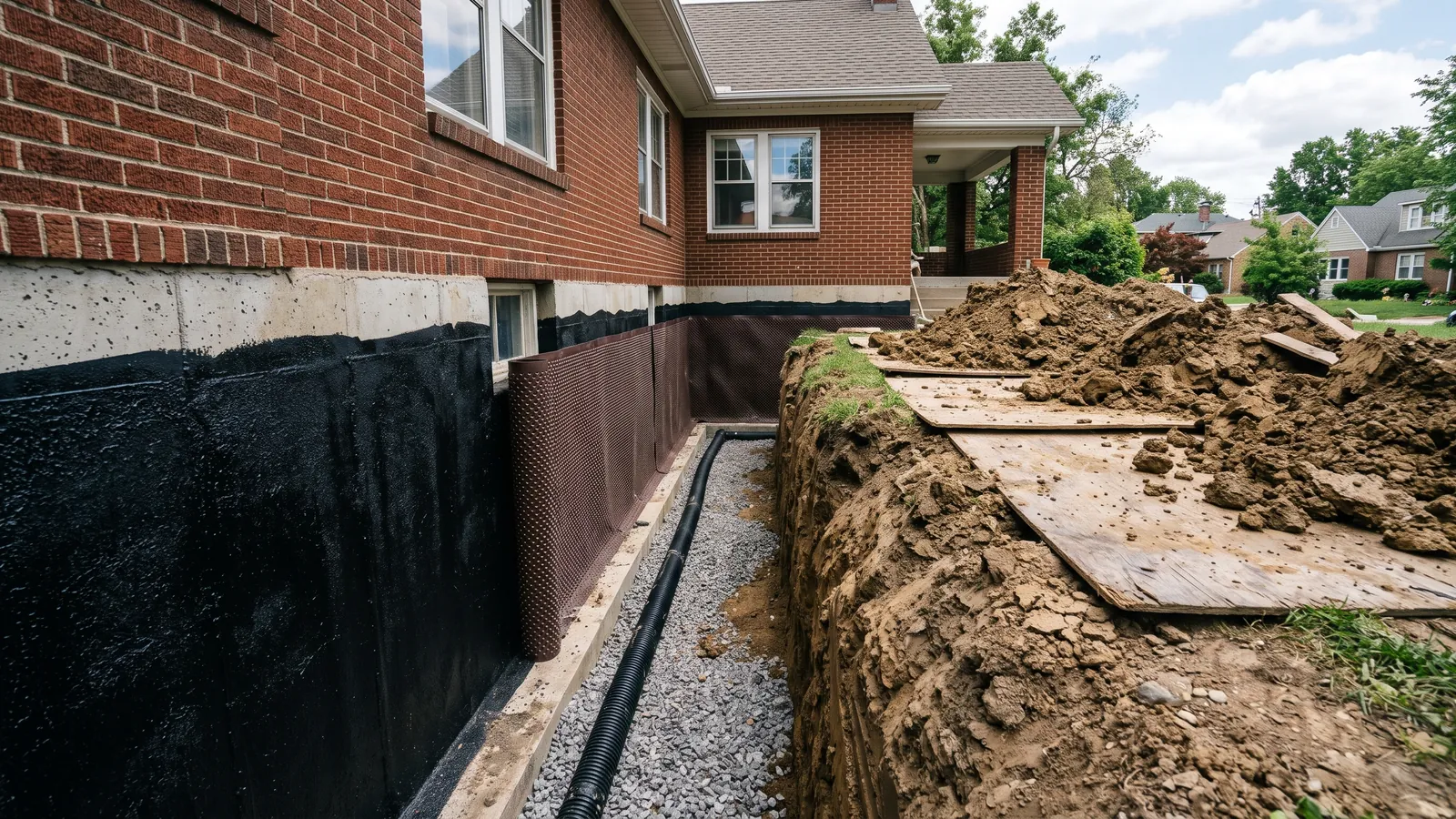
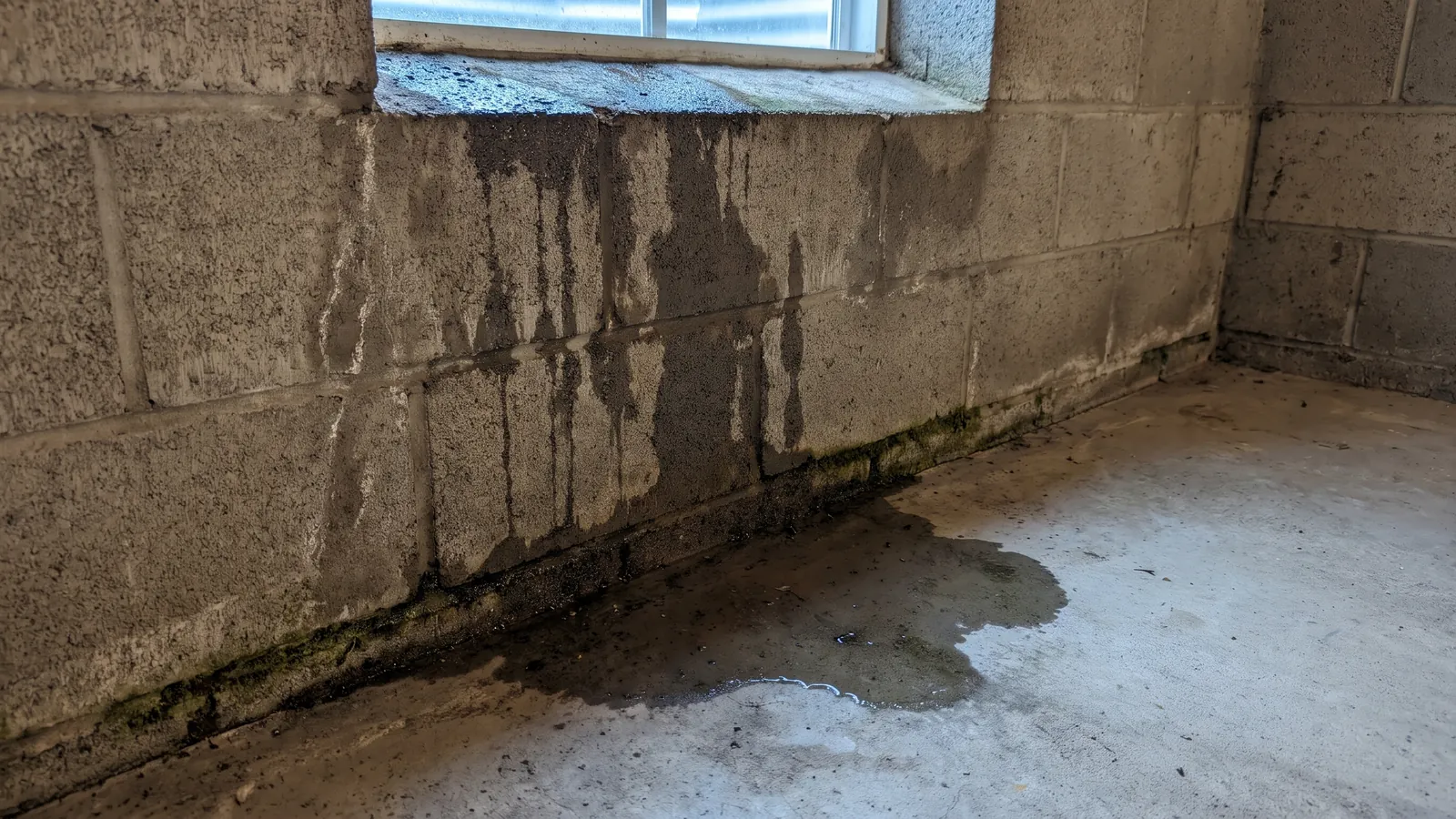
Clay doesn't drain. When a spring thunderstorm drops an inch of rain on a yard in Waldo or Shawnee, the loose backfill around the foundation fills like a bathtub while the undisturbed clay beyond it barely takes any. The water builds up against the wall, finds the cove joint where the wall sits on the footing, and comes in along the floor edge. That's hydrostatic pressure, and it is why so many basements here take water in the same corners, every spring, right on schedule.
We start outside, because the cheapest gallon of water is the one that never reaches the wall. Gutters that overflow, downspouts that empty against the foundation, a patio that slopes toward the house, a window well with no drain: these are fixed first, and on some houses they are most of the answer. Then, if water still gets in, there are two main approaches.
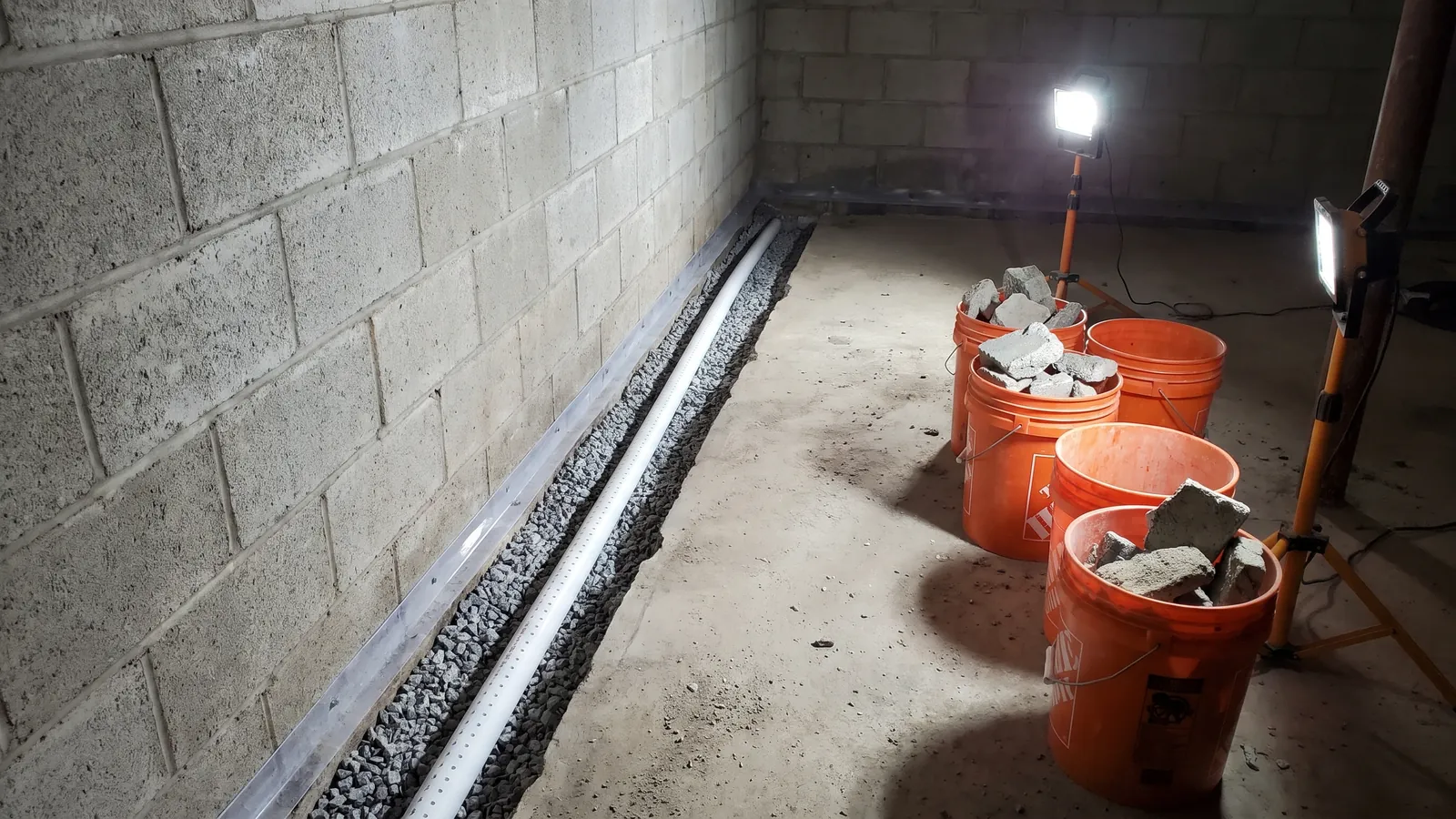
Interior drainage is the most common fix for an existing house. We cut a strip of the floor along the walls, dig a trench beside the footing, lay perforated pipe in clean gravel, set a flange or membrane against the wall to steer seepage down into it, and run the pipe to a sump pump. New concrete closes the floor. It handles water from the walls and from under the floor, works year-round, and doesn't disturb the yard. Exterior waterproofing means digging down the outside of the wall to the footing, cleaning it, applying a rubberized membrane and a drainage board, and laying a footing drain before backfilling with gravel. It keeps water out of the wall itself and suits a single problem wall, a finished basement you don't want to disturb, or a house with room to dig.
We don't sell paint-on sealers as a cure for a leaking basement. They can help with dampness on a dry wall, but water under pressure pushes them off. We will tell you which approach fits your basement, and often the right plan is outside fixes plus a partial interior drain on the walls that leak.
What the work includes
Water traced
Where it enters, when, and how much, matched to gutters, grading, window wells and the walls themselves.
Outside fixes first
Downspout extensions, grading corrections and window well drains priced as their own lines, because they are the cheapest water stopped.
Interior perimeter drain
Pipe in gravel beside the footing, a wall flange to catch seepage, and a sump to send it out.
Exterior membrane
Excavation to the footing, rubberized membrane, drainage board and a footing drain, then gravel backfill.
Cracks sealed
Leaking poured-wall cracks injected as part of the same plan.
Humidity handled
A dehumidifier recommendation where the basement stays damp even when the walls are dry.
What basement waterproofing costs in Kansas City
| Item | Planning range | What moves it |
|---|---|---|
| Interior perimeter drain, per linear foot | $65 – $110 | Floor thickness, depth, obstacles |
| Interior drain, typical full basement | $8,000 – $16,000 | Perimeter length and sump included |
| Exterior waterproofing, per linear foot | $150 – $300 | Depth, access, landscaping, decks |
| Downspout extensions and regrading | $300 – $2,500 | Often the first line on the scope |
| Window well drain and cover | $350 – $900 per well | Depth and connection to drain |
These are planning ranges for the Kansas City metro, not quotes. Your price is written after the free inspection, line by line, and nothing starts until you approve it.
On the job
Common questions
Interior or exterior: which is better?
Exterior keeps water out of the wall; interior manages water that gets in. For most existing homes here, interior drainage is the more practical and affordable answer. Exterior makes sense for one bad wall, a finished space you don't want to open up, or a house with easy access.
Will an interior drain make my basement completely dry?
It stops water from the walls and floor edge from collecting on your floor. Humidity is a separate thing, which is why we sometimes recommend a dehumidifier as well.
Can you waterproof a finished basement?
Yes. Interior drainage means opening the bottom of the finished walls; exterior waterproofing leaves the inside alone. We price both so you can compare.
Why does my basement only leak in spring?
That is when storms saturate the clay around the house. A dry July and August can open gaps along the foundation that let the next storm's water straight down to the footing.
Does homeowners insurance cover a wet basement?
Gradual seepage usually isn't covered. Some policies cover water from a failed sump pump if you added that rider. Check with your agent.