Under a bouncy floor and a musty smell, there is usually a damp crawl space
Crawl spaces in the metro sit on the same clay as basements, often with bare dirt floors and open vents. Moisture comes up from the ground, wood stays damp, posts settle, and the floor above starts to sag and smell.
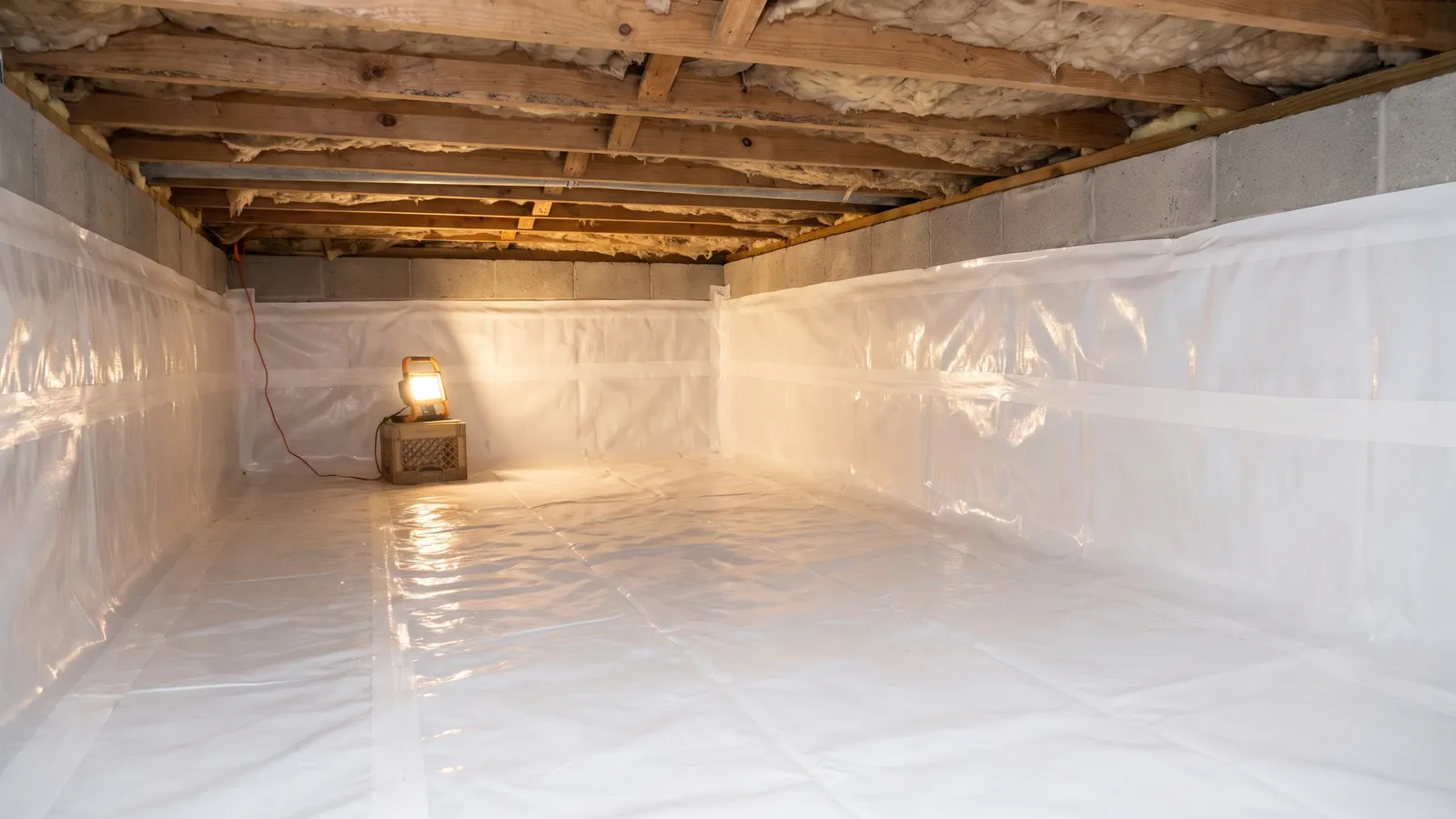
Plenty of houses here have crawl spaces, under additions on older homes, under parts of split-levels, and under whole houses in some neighborhoods. The trouble is moisture. A bare dirt floor gives off water vapor all year. Summer air coming in through the vents is warm and humid; it hits cooler surfaces under the house and condenses. Over time the joists and girders stay damp, insulation sags and falls, mold grows on the wood, and the posts holding up the main beam, often wood on loose blocks or on a shallow footing in clay, settle or rot.
Upstairs, you notice it as a floor that bounces or dips in the middle of a room, a musty smell when the HVAC kicks on, high humidity and higher energy bills, or doors near the center of the house that start to stick.
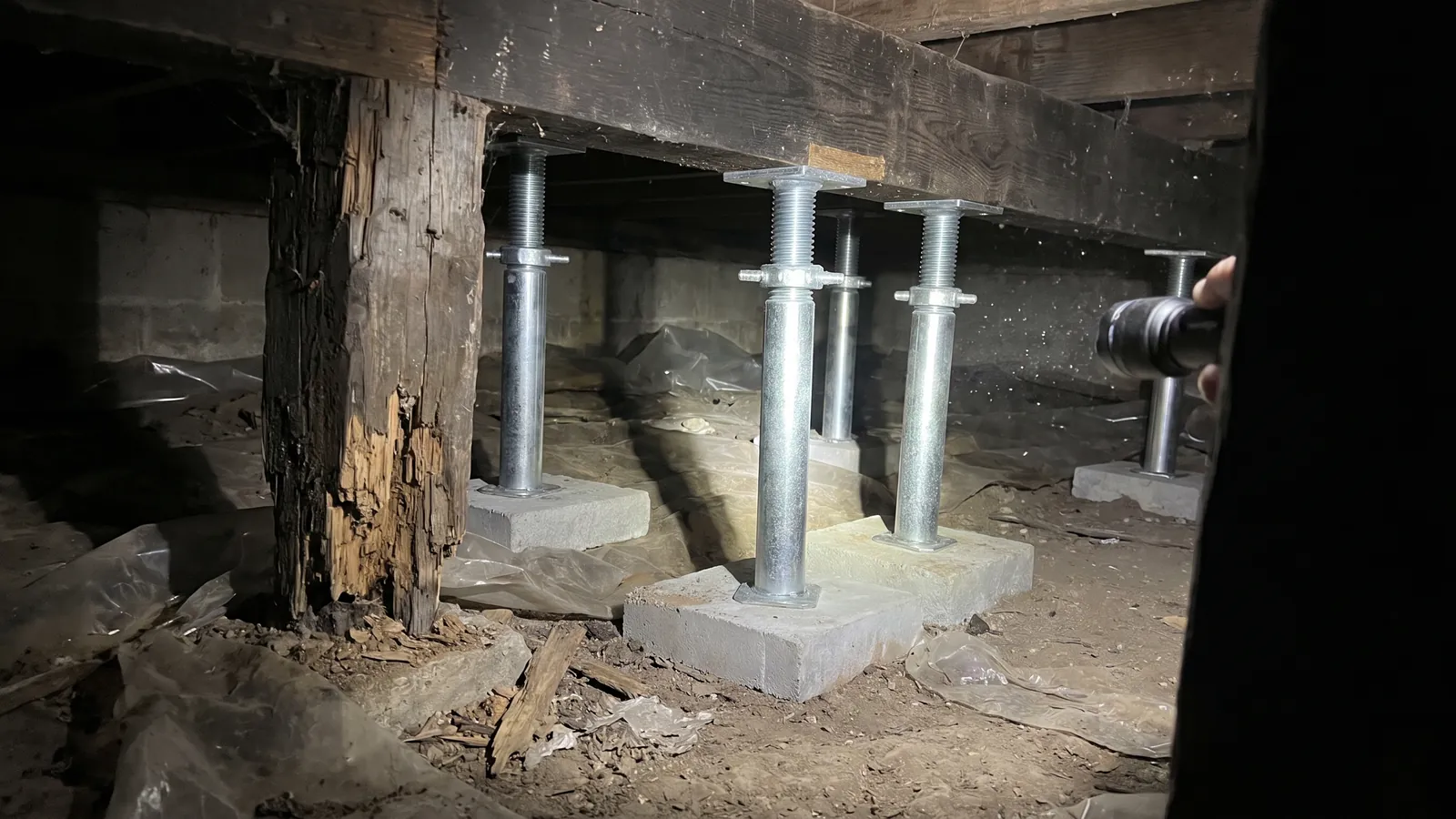
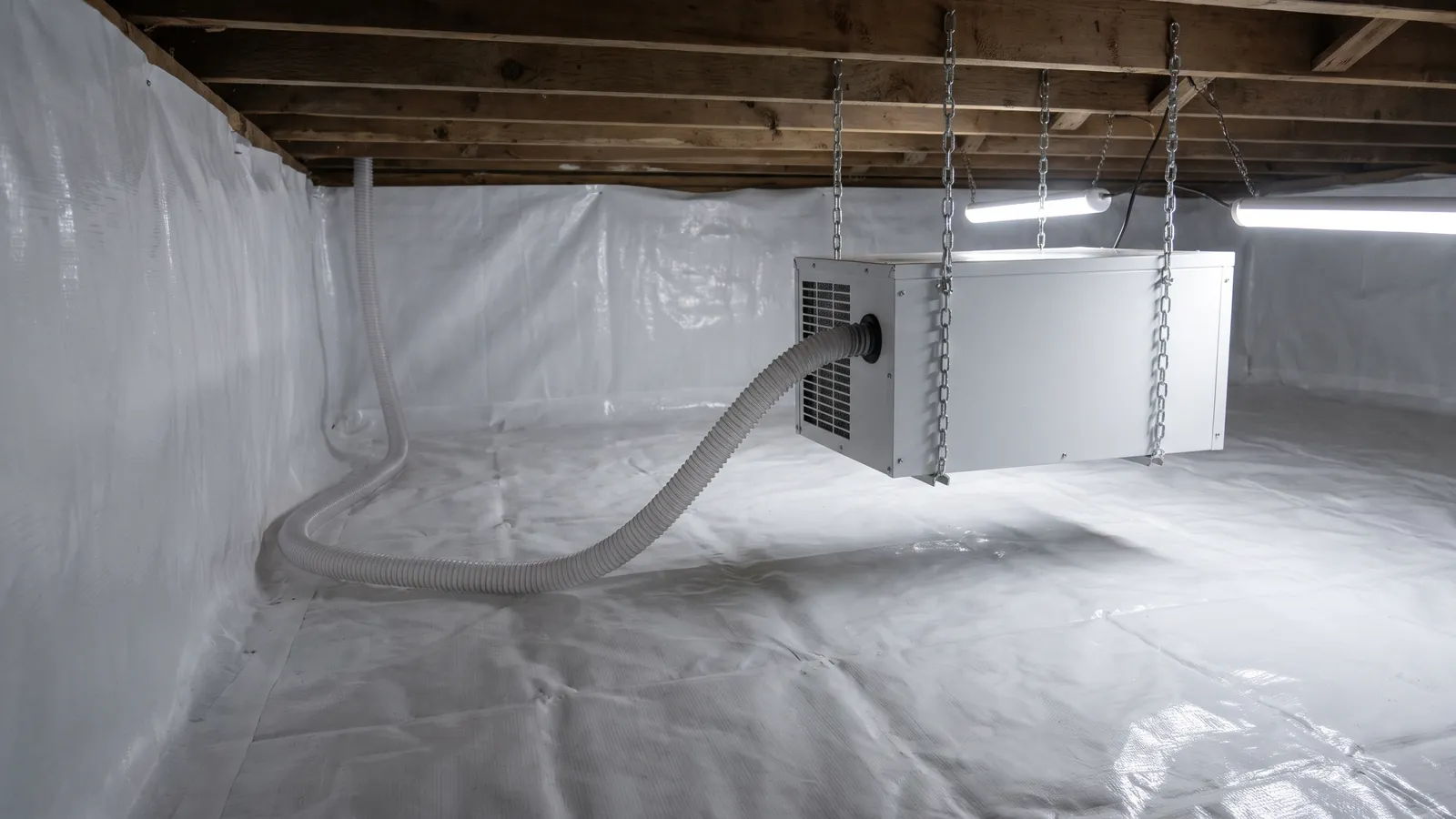
Repair goes in the order the problems stack up. First, water: if water pools in the crawl space after storms, it needs a drain and often a small sump. Next, support: settled or rotted posts are replaced with adjustable steel support jacks on proper footings, and the floor is brought back up gradually. Then moisture control: a heavy vapor barrier over the ground, and for a full encapsulation, the barrier carried up the walls and sealed, vents closed, and a dehumidifier installed to hold the space at a steady humidity. Insulation goes on the walls rather than between the joists, where it falls when it gets wet.
Not every crawl space needs everything. A dry crawl space with a torn barrier may just need a new one. We tell you which parts matter for yours.
What the work includes
Moisture read
Humidity, wood moisture and any standing water measured, not guessed.
Drainage first
Standing water handled with a drain and sump before anything gets covered up.
Steel support jacks
Settled or rotted posts replaced with adjustable steel jacks on footings, floors brought up gradually.
Vapor barrier
Heavy reinforced liner over the ground with taped seams.
Full encapsulation
Liner sealed up the walls, vents closed, and a dehumidifier set to hold the space dry.
Wall insulation
Rigid insulation on the walls where it stays put, instead of soggy batts between joists.
What crawl space repair costs in Kansas City
| Item | Planning range | What moves it |
|---|---|---|
| Vapor barrier only (ground) | $1,500 – $4,000 | Square footage and access |
| Full encapsulation with dehumidifier | $6,000 – $15,000 | Size, wall height, drainage |
| Steel support jack, per jack | $350 – $800 | Footing needed and access |
| Crawl space drain and sump | $2,000 – $5,000 | Length of drain, pump type |
| Crawl space dehumidifier installed | $1,500 – $2,800 | Capacity and drain routing |
These are planning ranges for the Kansas City metro, not quotes. Your price is written after the free inspection, line by line, and nothing starts until you approve it.
On the job
Common questions
Should crawl space vents be open or closed?
In an encapsulated crawl space, closed and sealed. Open vents let in humid summer air that condenses under the house. In a crawl space that isn't sealed, closing vents without dealing with ground moisture can make things worse.
Is encapsulation worth it?
For a damp crawl space under living space, it usually pays back in a drier, less musty house and a floor that stops getting worse. For a dry crawl space under a porch, a ground barrier may be all it needs.
Can you level a sagging floor?
We bring it up in small increments with adjustable jacks, because lifting too fast cracks plaster and drywall above. Floors that sagged for years may not come back perfectly flat.
How do I know if the crawl space is the problem?
A musty smell, bouncy floors, high indoor humidity and cold floors in winter all point there. A look with a flashlight, or our free inspection, confirms it.
Do crawl space repairs need a permit?
Support jacks and structural changes can. Vapor barriers and dehumidifiers generally don't. We check with your city.