A wall leaning into the basement is losing an argument with the soil outside
Wet clay is heavy and it swells. Behind a basement wall with poor drainage it pushes inward, and a block wall gives first along a mortar joint. The repair depends on how far the wall has moved, and every option should come with a plan for the water.
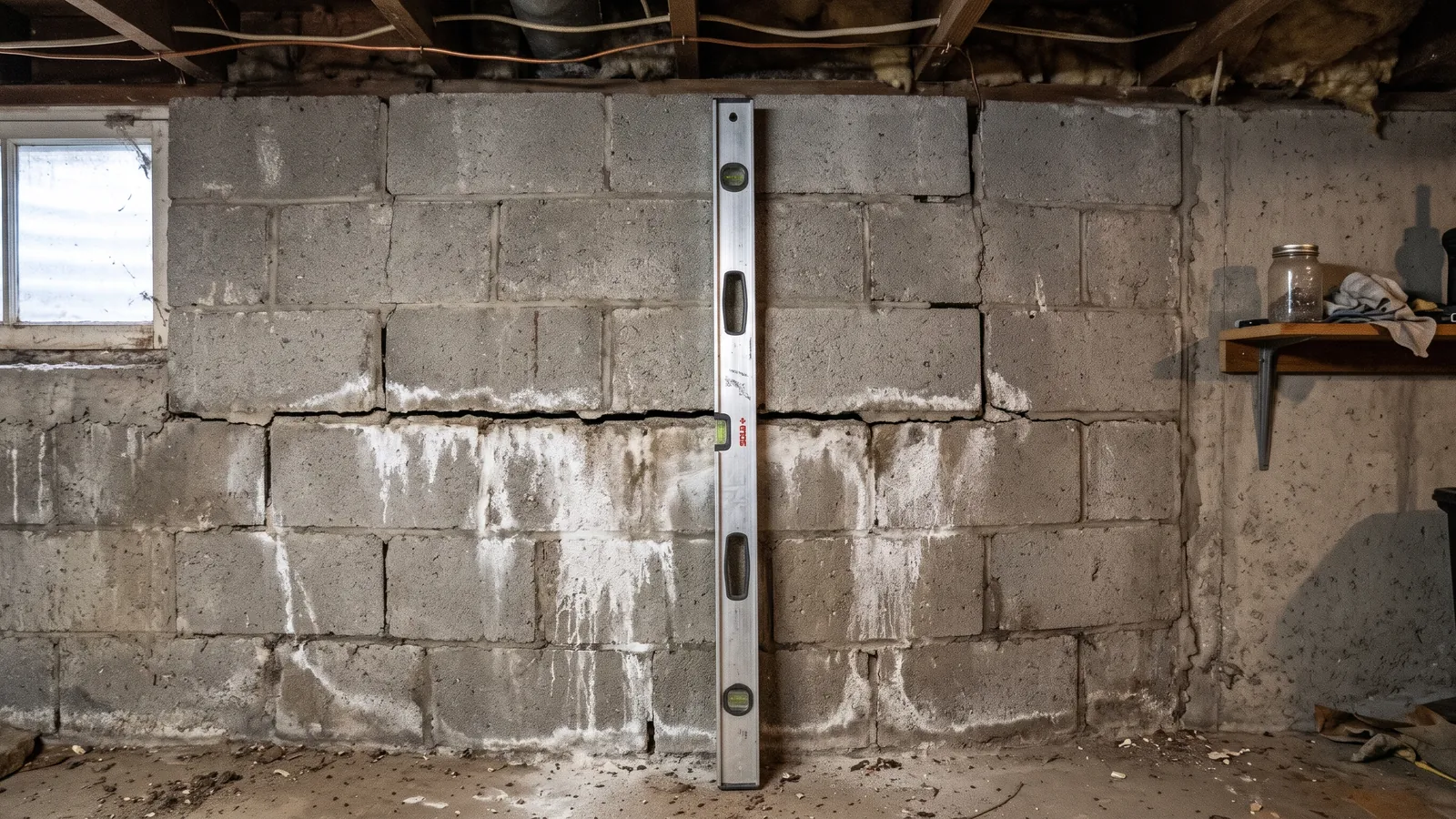
The telltale sign is a horizontal crack along a mortar joint, usually a third to halfway up a block wall, often with a stair-step crack running off each end toward the corners. Lay a long level or a straight board against the wall and you can see the bow: the middle of the wall sits closer to you than the top and bottom. On poured walls, bowing is less common but shows as a horizontal crack with the wall below it stepped in. White, chalky efflorescence below the crack tells you water is moving through the wall too.
The cause in this metro is nearly always the same combination. Spring storms saturate expansive clay, which swells and exerts pressure on the wall. Freezing water in the soil near the top adds more. A downspout dumping next to the house or a yard that slopes toward it keeps the soil wet longer. The wall was never designed for that load, and every wet season it moves a little more.
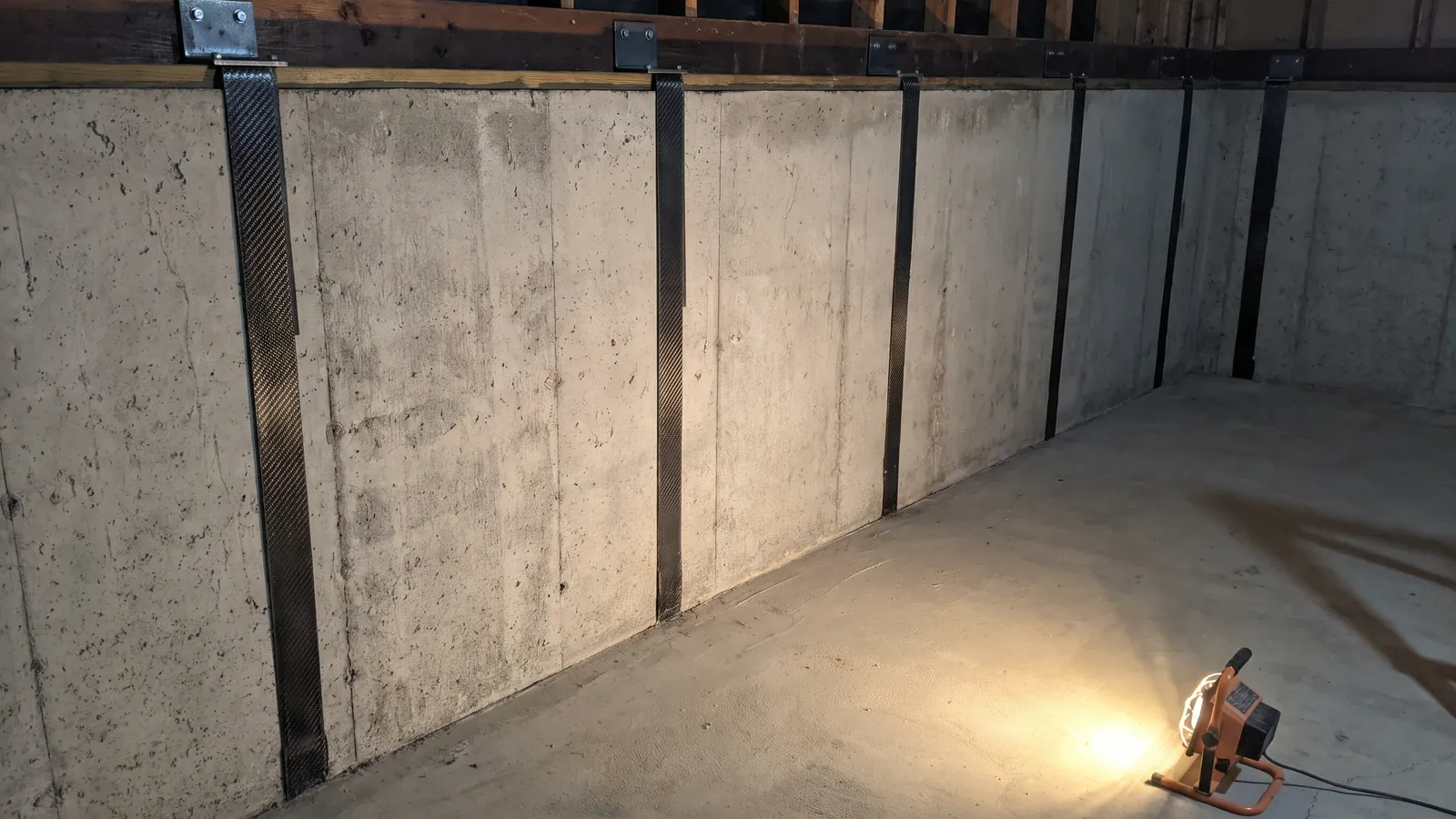
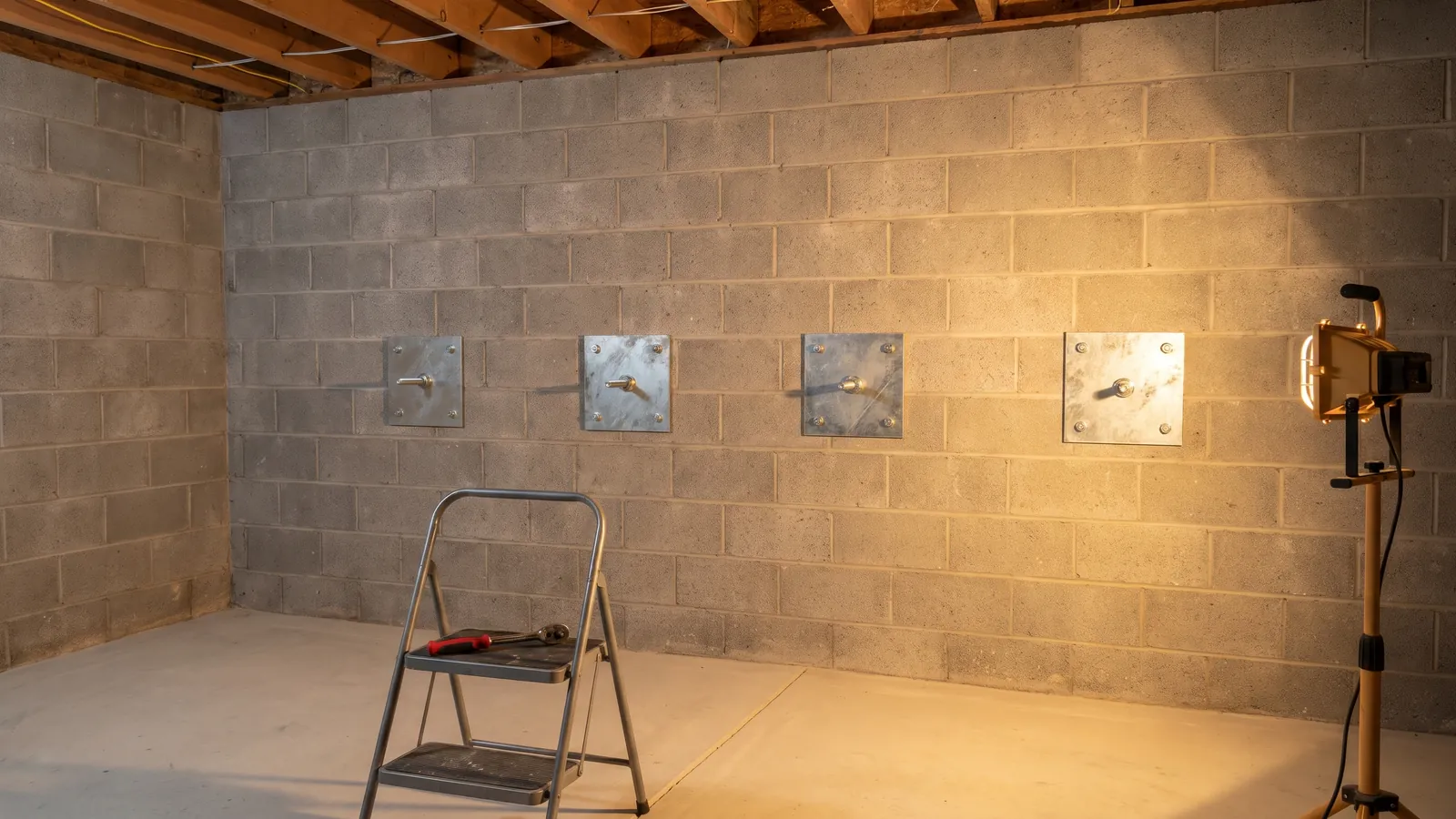
We choose the repair by how far the wall has moved. For walls that have deflected up to about two inches, carbon fiber straps epoxied to the wall every few feet and tied to the framing above stop further movement with almost no space taken. For walls that have moved more, or where we want the option to pull the wall back over time, wall anchors are installed: a steel plate inside, a rod through the wall to an earth anchor plate buried in stable soil out in the yard, tightened in stages. Where the yard has no room for anchors, like a driveway along the wall or a neighbor's house close by, steel I-beam braces are set from floor to joists. A wall that has bowed so far it is sliding at the bottom or about to fail is excavated and rebuilt, and we will tell you plainly if that's where yours is.
With every option, we look at the water: extending downspouts, regrading, and often an interior drain at the base of the wall. Bracing a wall without fixing what loads it is half a job.
What the work includes
Deflection measured
How far the wall has moved, top to bottom and along its length, so the method fits the wall.
Carbon fiber straps
High-strength straps bonded to the wall and anchored to the sill for walls with modest bowing; nearly flush and paintable.
Wall anchors
Plates inside, rods to earth anchors in the yard, tightened over time and able to pull a wall back toward straight.
Steel braces
I-beams from floor to joists where anchors won't fit, adjustable after install.
Water addressed
Downspouts, grading and drainage written into the scope, so the load on the wall goes down.
Straight about rebuilds
A wall past saving is excavated and rebuilt, and we say so instead of strapping it.
What bowing basement walls costs in Kansas City
| Item | Planning range | What moves it |
|---|---|---|
| Carbon fiber strap, per strap | $600 – $1,100 | Typically every 4 feet along the wall |
| Wall anchor, per anchor | $700 – $1,300 | Yard access and soil conditions |
| Steel I-beam brace, per beam | $800 – $1,400 | Height and connection to framing |
| Typical 30-foot wall, anchors or straps | $5,000 – $11,000 | Count and method |
| Excavate and rebuild a failed wall | $18,000 – $35,000+ | Length, depth, access and drainage |
These are planning ranges for the Kansas City metro, not quotes. Your price is written after the free inspection, line by line, and nothing starts until you approve it.
On the job
Common questions
Is a bowing wall dangerous?
A wall with a fresh horizontal crack and modest bowing isn't usually about to fall, but it will keep moving with each wet season. A wall that is bulging sharply, sliding at the bottom or separating from the floor joists above needs attention right away.
Can a bowed wall be pushed back?
Wall anchors and adjustable braces can pull a wall back gradually, usually by tightening a little each season when the soil is dry. Forcing it back in one go cracks it further. Carbon fiber holds a wall where it is.
Will straps hold a finished basement wall?
They need direct contact with the concrete, so drywall comes off along the wall while they go in. They are thin enough that new framing can go back over them.
Why does my block wall bow and my neighbor's poured wall doesn't?
Mortar joints are the weak plane in a block wall, and the hollow cores hold water. Poured walls resist bending better, though they can crack horizontally under enough pressure too.
Do I need a permit?
Structural bracing usually does. We check with your city and pull it.