When the front step tips toward the house, it is sending water to the foundation
Slabs beside a house sit on backfill that was dug out and put back when the foundation was built. It settles, the slab drops, and it usually tips toward the wall. That's a trip hazard and a drain pointed straight at the basement.
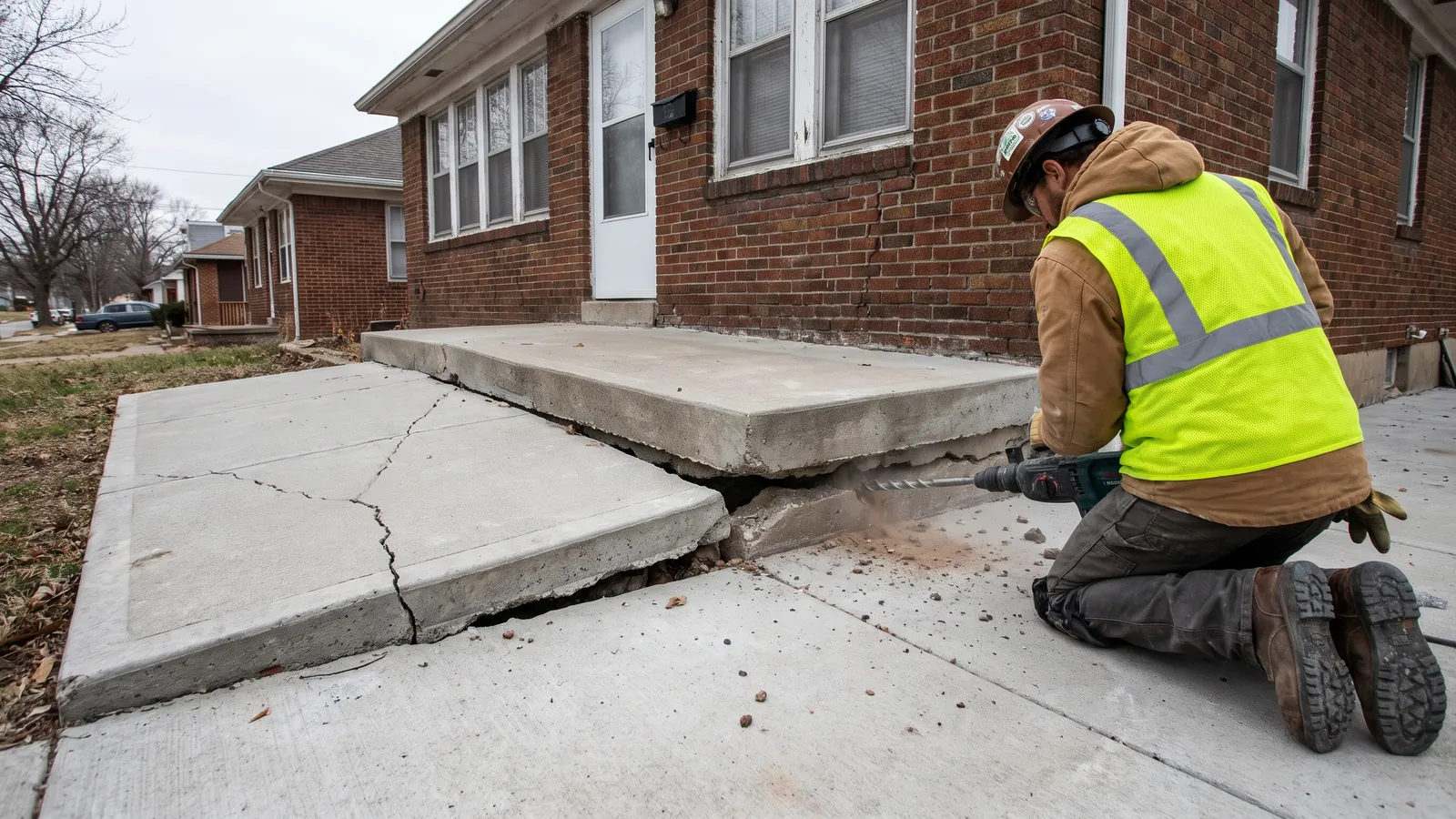
We lift slabs as part of protecting the foundation, not as decorative concrete work. The ones we care about are the slabs right against the house: a front porch or stoop that has dropped an inch and pulled away from the brick, steps that sank at the bottom, a walk that now slopes toward the wall, a patio that sends rain toward the basement, or a garage apron that dropped where it meets the driveway. Each one is a surface that collects water and points it at your foundation, and in clay, every settled inch makes it worse.
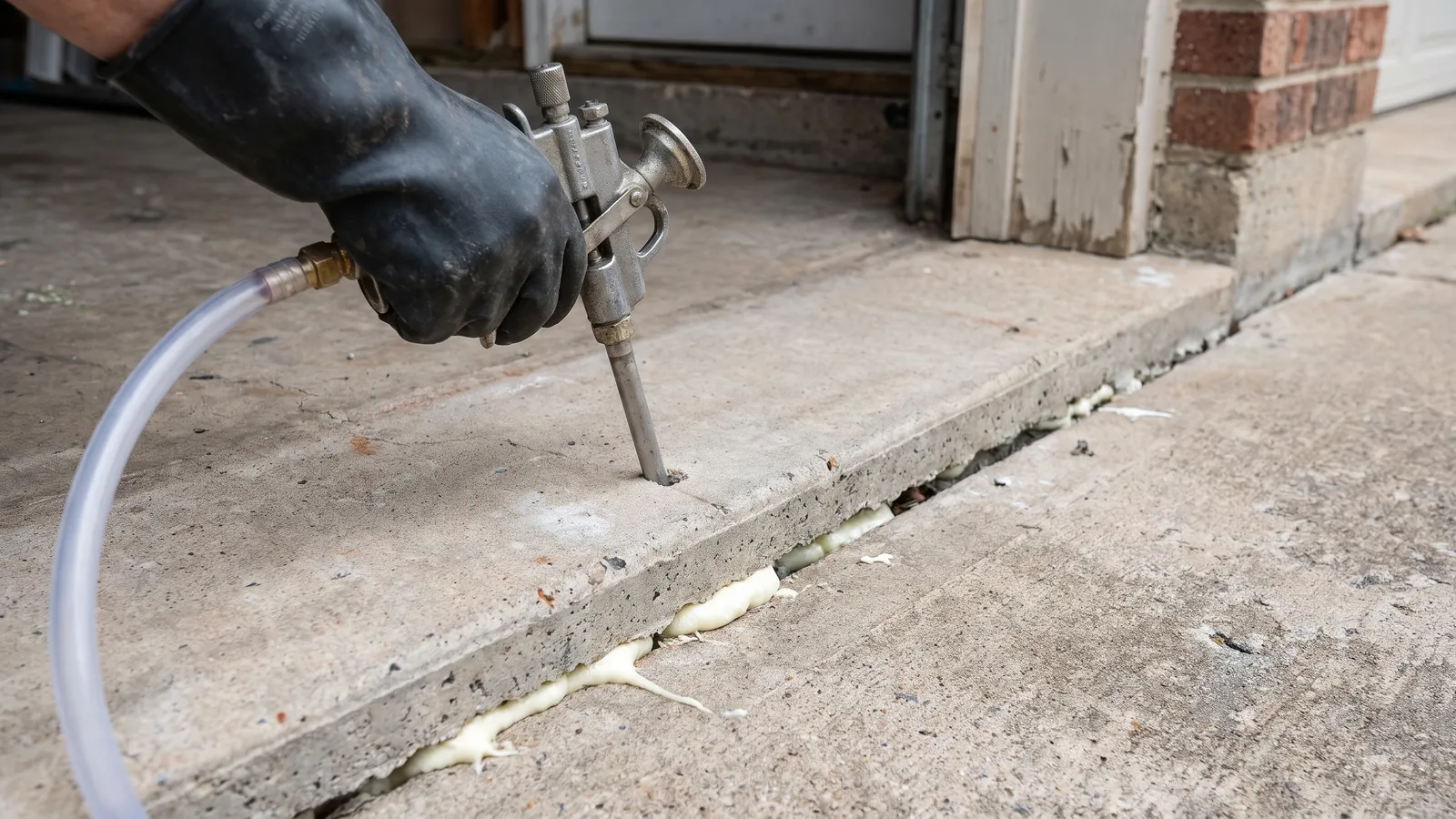
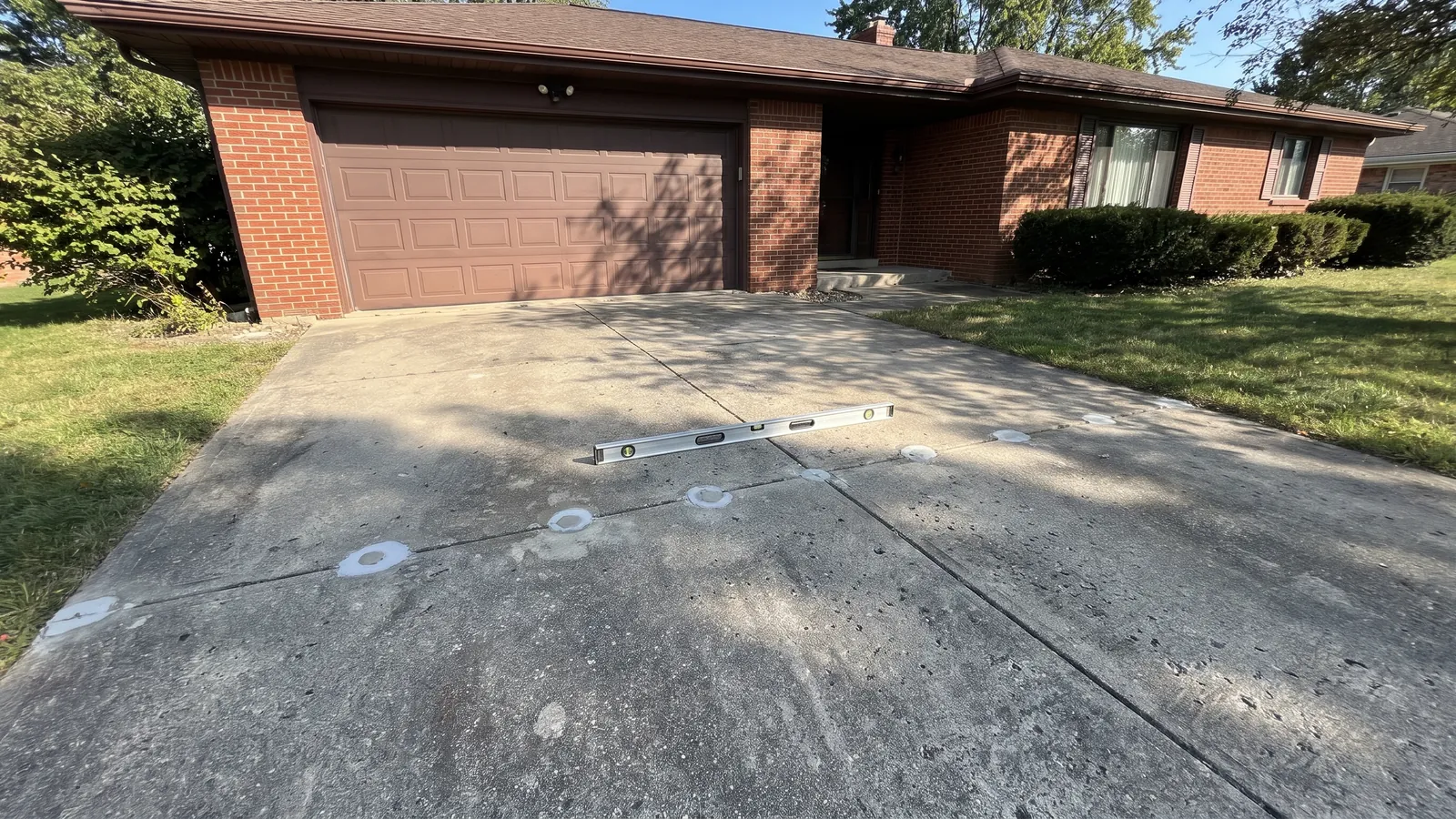
Our method is polyurethane foam injection. We drill a few small holes, about the size of a nickel, through the slab, inject a two-part foam beneath it, and the foam expands to fill the voids and lift the slab in a controlled way while we watch a level. It cures in minutes, weighs very little, so it doesn't add load to soft soil, and doesn't wash out. The holes are patched and the joint along the house is sealed so water can't get back under. Most porches, steps and aprons are done in an hour or two, and you can walk or drive on them the same day.
Not every slab should be lifted. A slab broken into many pieces, crumbling at the surface, or sitting over a large washout may be better replaced. And if the slab dropped because a downspout empties under it, we fix the downspout too, or the void comes back.
What the work includes
Cause looked at
Downspouts, gutters and grading checked so the slab doesn't settle again.
Small holes
Nickel-sized injection ports, a handful per slab, patched to match.
Polyurethane foam
Lightweight, quick-curing foam that fills voids and lifts the slab while we watch a level.
Slope corrected
Slabs set back with a slight fall away from the house where possible.
Joint sealed
The gap at the foundation filled and sealed so water can't get under again.
Same-day use
Most lifted slabs can be walked or driven on within the hour.
What sunken slab lifting costs in Kansas City
| Item | Planning range | What moves it |
|---|---|---|
| Porch or stoop lift | $600 – $1,600 | Size and how far it dropped |
| Front steps lift | $500 – $1,300 | Number of steps, attached or separate |
| Garage apron or driveway section | $700 – $2,000 | Area and thickness |
| Walk or patio slab, per section | $400 – $1,100 | Area and voids |
| Joint sealing along the house | $3 – $8 per foot | Usually done with the lift |
These are planning ranges for the Kansas City metro, not quotes. Your price is written after the free inspection, line by line, and nothing starts until you approve it.
On the job
Common questions
Mudjacking or foam?
Mudjacking pumps a heavy cement slurry under the slab through larger holes. It works, but it adds weight to soil that already settled. Foam is lighter, uses smaller holes and cures faster, which is why we use it.
How long does a lifted slab stay up?
Years, when the cause is handled. Slabs re-settle when water keeps washing out the soil underneath, which is why we fix downspouts and seal the joint.
Can you lift a cracked slab?
Yes, if the pieces are large and sound. A slab broken into many small pieces or crumbling at the surface is usually better replaced.
Will lifting the porch fix the crack in the brick above it?
Not by itself. If the house is settling too, that needs its own look. Often the porch dropped on its own because it sits on backfill.
Do you do whole driveways?
We focus on the slabs that affect the house: porches, steps, walks, patios and the apron at the garage. For large flatwork replacement, a concrete contractor is the better call.