Basement wall cracks, sorted into the ones that matter and the ones that don't
A crack is a symptom with a shape. Width, direction, whether it leaks and whether it is growing tell us whether it needs a seal, reinforcement, or a look at what is pushing on the wall from outside.
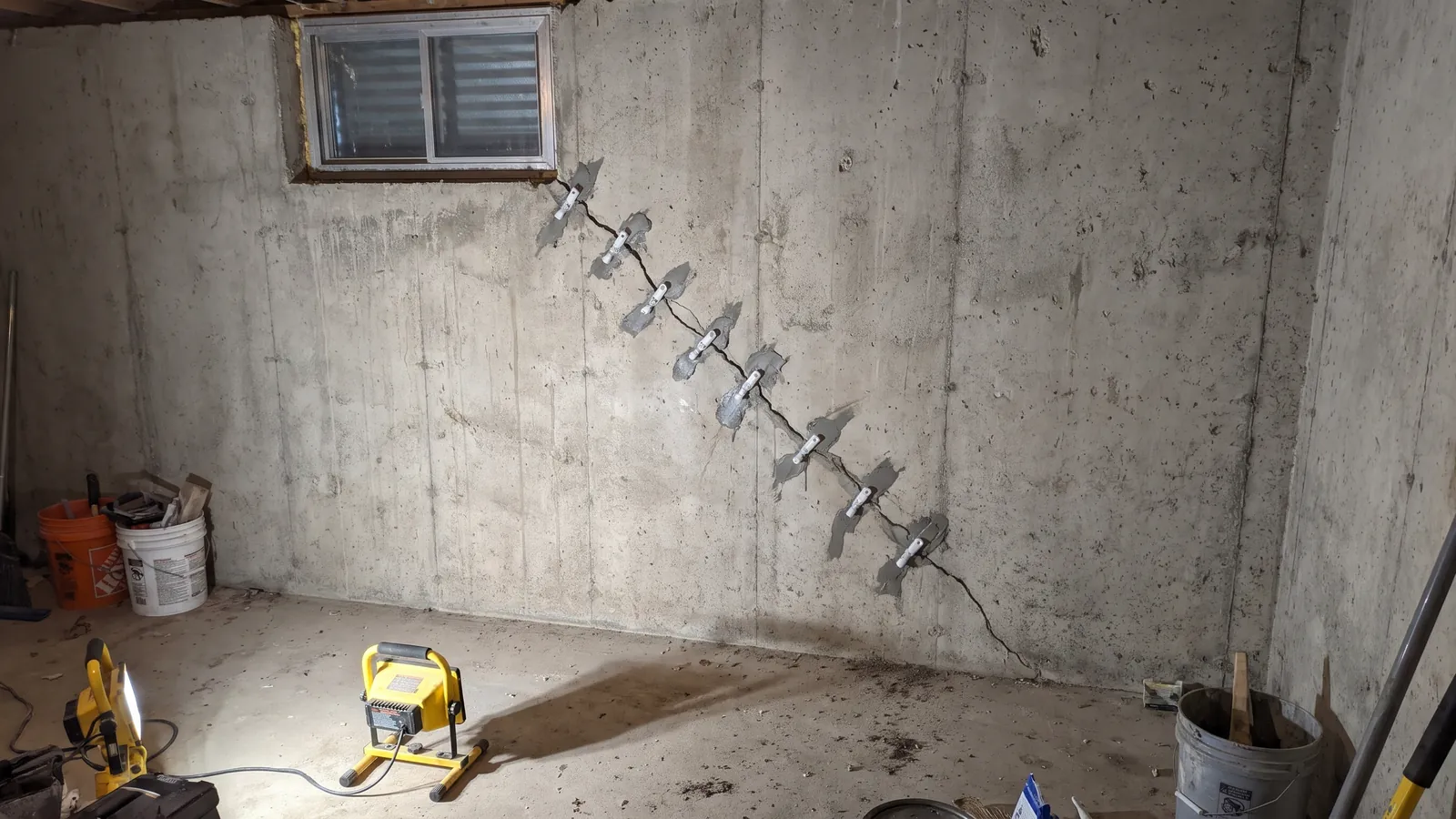
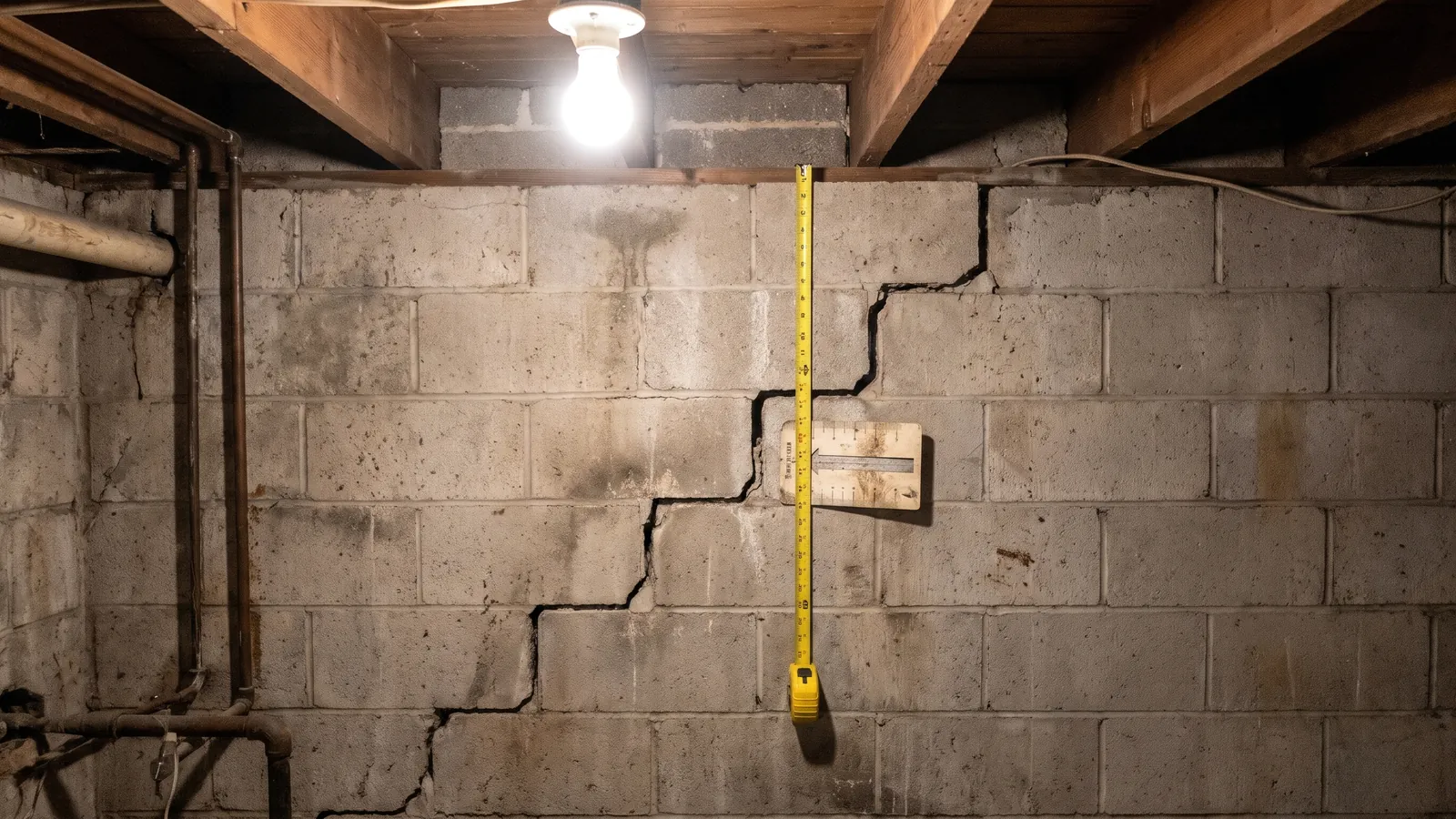
Kansas City basements come in two kinds, and they crack differently. Poured concrete walls, common from the 1960s on, crack in straight lines: thin verticals from shrinkage as the concrete cured, diagonals running off the corners of windows and from the ends of walls where settlement pulls one side down. Concrete block walls, which you find under a lot of 1940s and 50s houses in Raytown, Gladstone and the older parts of Overland Park, crack along the mortar joints, either in a stair-step pattern near a corner or in a long horizontal line partway up the wall.
The horizontal crack is the one we never wait on. It means the soil outside is pressing the wall inward, usually wet clay against a wall that was never drained, and it calls for bracing, which is covered on our bowing walls page. A stair-step crack near a corner usually means that corner is settling, and the fix may be piers rather than a seal. The rest, the verticals and modest diagonals in poured walls, are the ones crack repair is for.
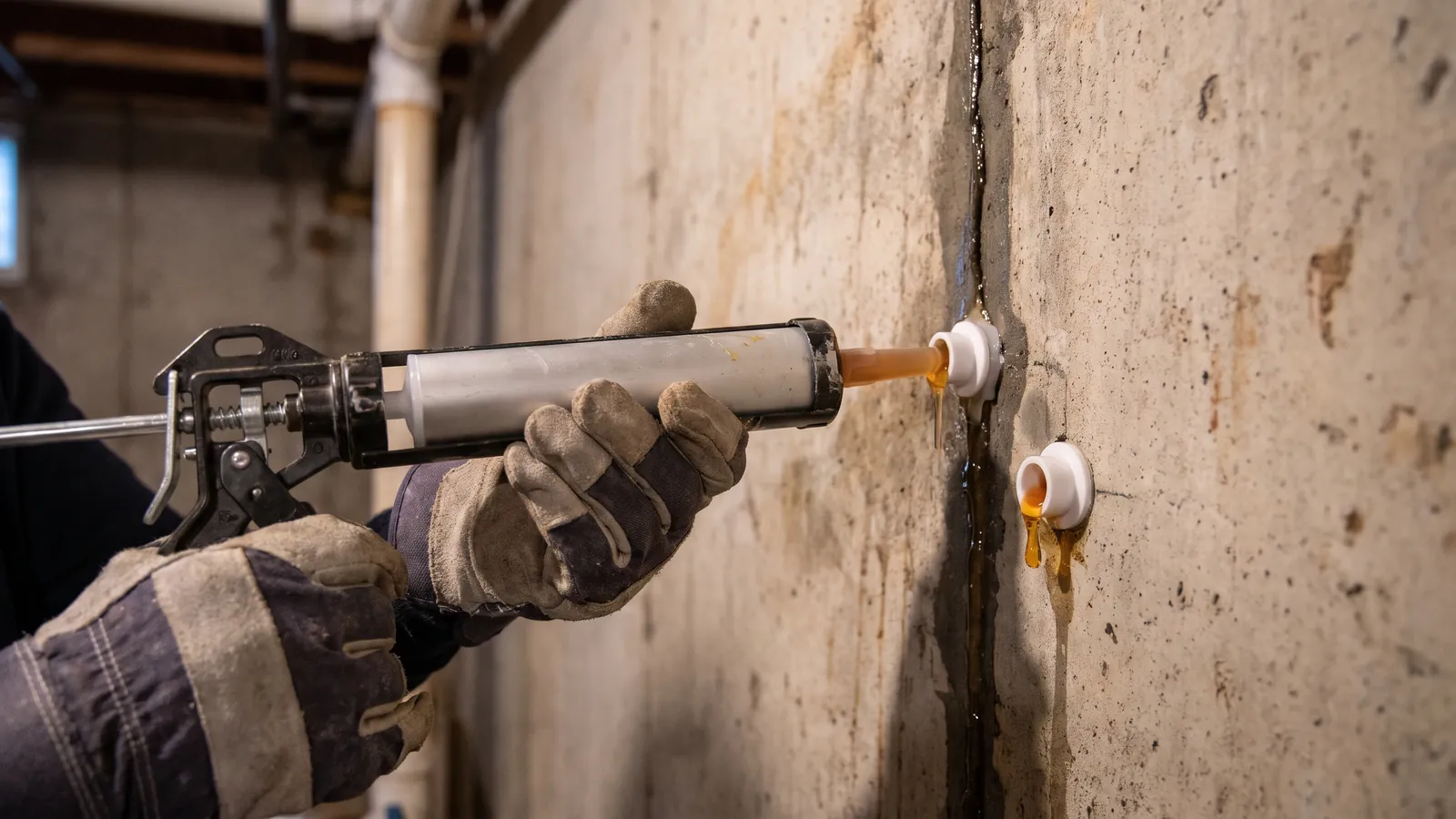
For a poured wall that leaks, we inject polyurethane resin from the inside. The crack is cleaned, ports are set along it, the surface is sealed with paste, and resin is pumped in from the lowest port up. It foams as it meets moisture and fills the crack all the way through to the soil side, which is what stops the water. For a crack that also needs strength, we use a structural epoxy instead, sometimes with carbon fiber stitches across it. Both are done in a few hours with no digging. Block walls don't take injection well, because the cores are hollow, so a leaking block crack is usually handled with drainage instead.
We measure every crack we look at and write the width down. If you have one that worries you but isn't leaking, the cheapest step is often to watch it: a crack gauge or a pencil mark at each end, checked through a wet spring and a dry August, tells you whether it's moving.
What the work includes
Measured and mapped
Width, length and direction of each crack recorded, with photos, so the repair choice is based on what the wall is actually doing.
Injection from inside
Polyurethane for leaking cracks, structural epoxy for cracks that need strength, both pumped through ports from the bottom up.
No digging
Poured-wall crack repair is done from the basement side; the yard and landscaping stay as they are.
Cause checked
Downspouts, grading and wall movement checked at the same visit, so a crack that is a sign of something bigger is not just sealed over.
Block walls handled honestly
Hollow block does not hold injection well; we say so and price the drainage or reinforcement that actually works.
Clean finish
Ports trimmed, paste ground smooth, the work area vacuumed before we go.
How the job runs
- InspectionWe map the cracks, measure them, check for water and movement, and explain what each one means.
- Written scopeEach crack and the method for it, priced, with anything else we found listed separately.
- Injection dayUsually a half day: clean, port, seal, inject, then trim and tidy.
- Check after a stormCall us if an injected crack shows moisture after the next heavy rain and we come back to look.
What foundation crack repair costs in Kansas City
| Item | Planning range | What moves it |
|---|---|---|
| Polyurethane injection, one crack | $450 – $900 | Length and wall thickness; most are 6 to 8 feet |
| Structural epoxy injection, one crack | $550 – $1,100 | Used when the crack also needs strength |
| Carbon fiber stitches across a crack | $300 – $700 | Added where movement is a concern |
| Additional cracks, same visit | Lower per crack | Setup is shared |
| Free inspection and crack mapping | $0 | Includes written notes |
These are planning ranges for the Kansas City metro, not quotes. Your price is written after the free inspection, line by line, and nothing starts until you approve it.
On the job
Common questions
Should I seal a hairline crack myself?
A surface sealant from the hardware store stops very little water, because it sits on the inside face while the water comes through the whole wall. It does no harm on a dry hairline, but if the crack leaks, injection all the way through is the fix that holds.
How do I know if a crack is growing?
Mark both ends with a pencil and the date, and measure the width with a crack card or a ruler. Check again after a heavy rain and again at the end of summer. Growth of more than a sixteenth of an inch in a season is worth a call.
Is a crack wider at the top a bad sign?
It usually means one end of the wall is settling and rotating away. That is a settlement crack, and sealing it alone won't stop it opening further. We check the floor elevations to see which corner is going down.
Will an injected crack crack again?
The injected section usually holds, but the wall can crack somewhere else if the cause, wet clay or settlement, is still at work. That is why we look at drainage and movement on the same visit.
Can you repair cracks in a finished basement?
Often, yes, by opening a strip of drywall at the crack. We tell you before we start how much wall needs to come off.