The pump that runs hardest in a Kansas City April deserves a backup
A sump pump sits quietly for months, then runs every few minutes through a week of spring storms, often on the same nights the power flickers. We size it for the water you actually get, add a backup that keeps going when the power doesn't, and send the water somewhere it won't come right back.
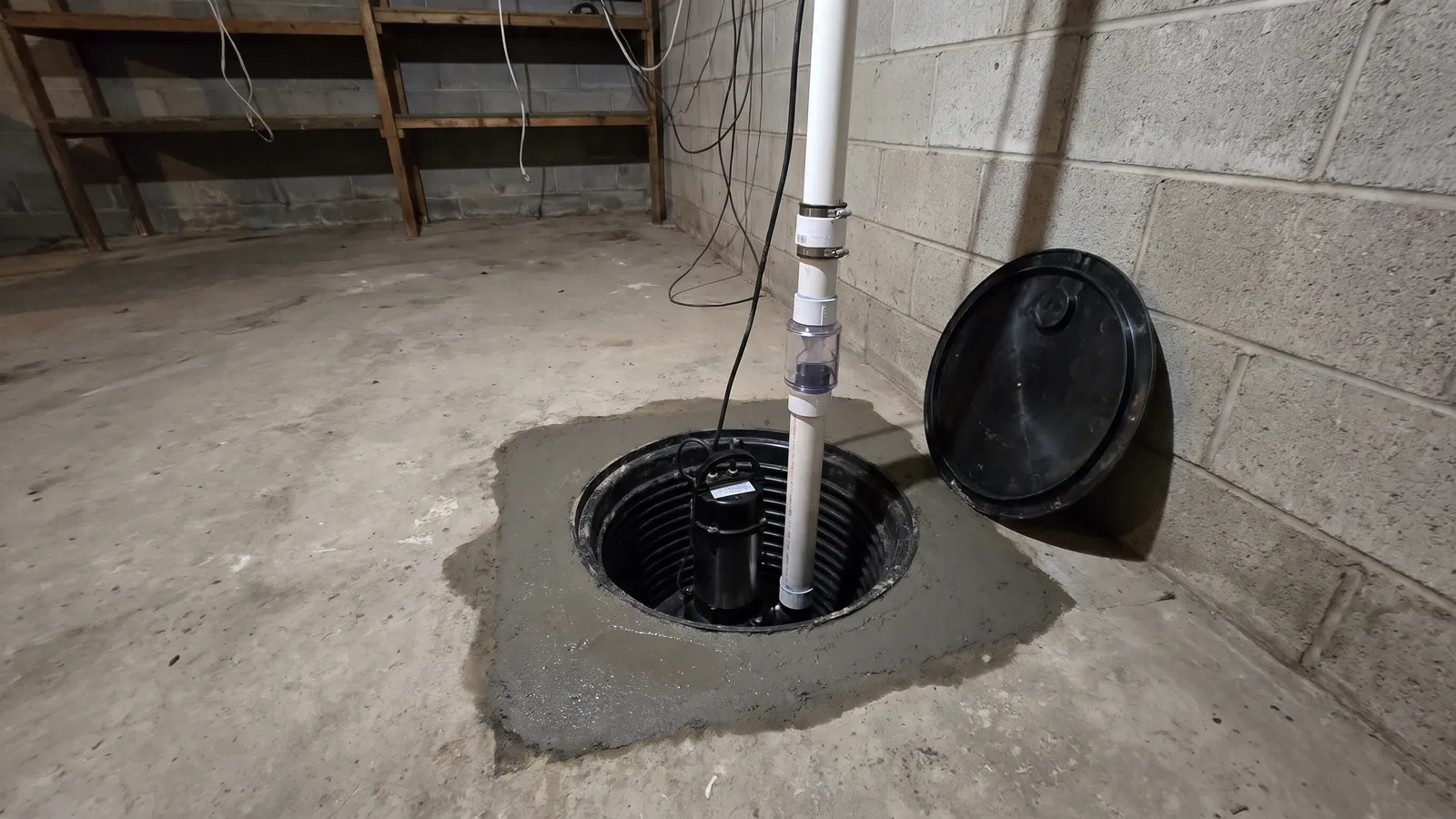
Most sump pumps in the metro do one of two jobs. In houses with an interior drain or a footing drain, the pump empties the pit those drains feed. In houses without one, a pit in the low corner of the basement relieves water pressure under the slab. Either way, the busiest time of year is the same: March through June, when the thunderstorms come one after another and the clay around the house stays saturated for weeks.
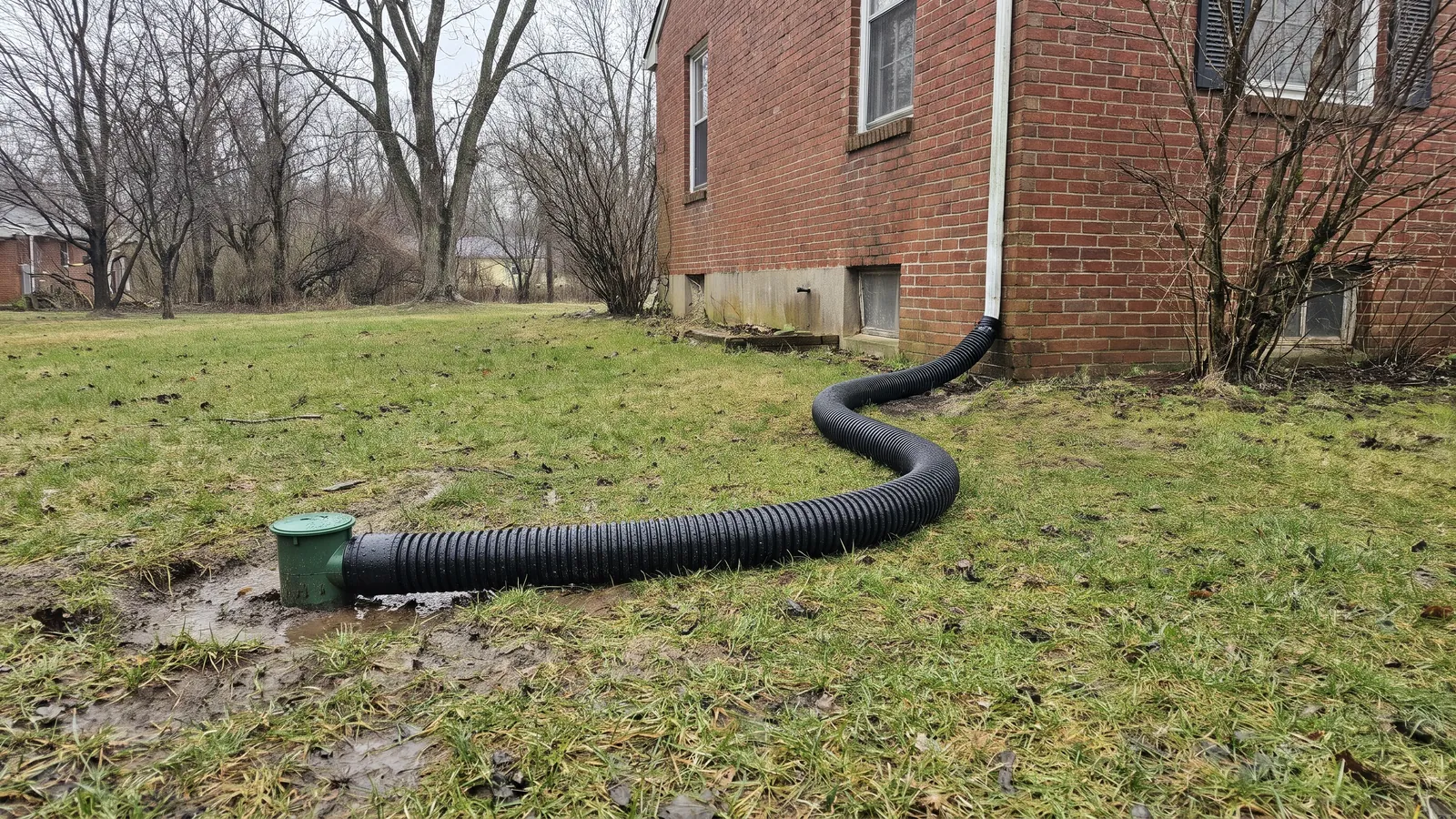
When we install or replace a pump, we look at the whole system. The basin should be a sealed, lidded pit, big enough that the pump doesn't cycle every minute and short-burn its motor. The primary pump is sized to the inflow we measure or expect, usually a cast-iron submersible with a reliable float switch. A check valve on the discharge stops the column of water in the pipe from falling back into the pit each time the pump shuts off. And the discharge line has to end far enough from the foundation, with a downhill run, that the water doesn't simply soak back down to the footing. A line that empties onto the patio three feet from the wall is a loop, not a solution.
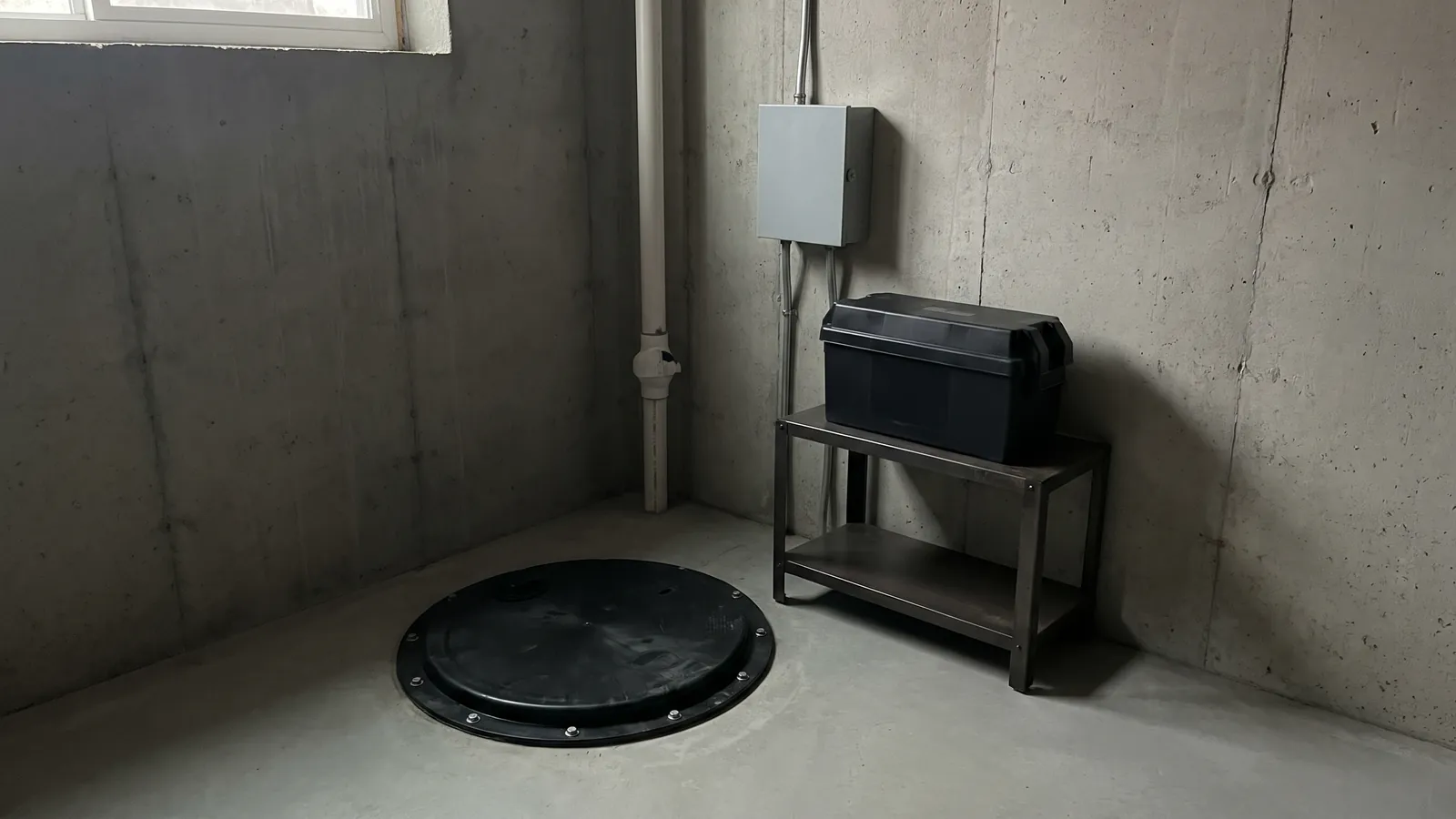
The piece we recommend on almost every job is a battery backup: a second pump in the same pit, on its own float, running from a deep-cycle battery that charges itself when the power is on. Storms that bring the most water are also the ones that knock out power, and a primary pump can also simply fail from age, a stuck float or debris. The backup buys hours of protection and sounds an alarm so you know. Where the house has city water at good pressure, a water-powered backup is another option.
We also fix what's around the pump: a pit cut into a floor with no lid, a pump wired through an extension cord, a frozen discharge line in January, or a line tied into the sanitary sewer, which most cities don't allow.
What the work includes
Inflow checked
How fast water enters the pit, so the pump is sized to the job and doesn't short-cycle.
Sealed basin
A lidded pit that keeps out debris and basement humidity, set into a neatly patched floor.
Cast-iron primary pump
A submersible pump with a reliable float switch for the steady work.
Battery backup
A second pump on its own float and battery, with an alarm, for power cuts and primary failures.
Check valve and discharge
No water falling back into the pit; a line that runs downhill and ends well away from the house.
Code-minded tie-ins
No discharge into the sanitary sewer and no extension cords on the pump circuit.
What sump pumps costs in Kansas City
| Item | Planning range | What moves it |
|---|---|---|
| Replace an existing pump | $500 – $1,100 | Pump type and piping changes |
| New pit and pump installed | $1,500 – $3,000 | Floor cutting, basin, discharge run |
| Battery backup system added | $900 – $1,900 | Pump, battery, controller and alarm |
| Discharge line rerouted or extended | $300 – $1,200 | Distance and burial |
| Check valve replaced | $150 – $300 | Usually done with the pump |
These are planning ranges for the Kansas City metro, not quotes. Your price is written after the free inspection, line by line, and nothing starts until you approve it.
On the job
Common questions
How long does a sump pump last?
Often 7 to 10 years for a good cast-iron submersible, less for a pump that runs constantly or sits in a pit full of debris. If yours is older than that and has had a busy few springs, replacing it before it fails is cheaper than the cleanup.
Do I really need a battery backup?
If water has ever come into the pit during a storm, yes. Power cuts and heavy rain arrive together, and the backup is the difference between a wet floor and a dry one.
Why does my pump run when it hasn't rained?
Water keeps draining through the clay for days after a storm, and a high water table under the slab can feed a pit for weeks in spring. If it runs constantly in August, something like a broken water line may be feeding it.
Can the discharge go into the floor drain?
In most cities, no. Floor drains usually connect to the sanitary sewer, and sump water belongs outside. We run it outdoors to a safe spot.
What about the discharge line freezing?
We slope the line so it drains, and add an overflow fitting near the house so a frozen line doesn't back water up into the basement.