The ground under Kansas City breathes every year, and houses ride along
Much of the metro sits on Shawnee and Grundy clays and the Wymore-Ladoga soils, rich in montmorillonite. Understanding what that clay does through a year explains almost every foundation problem we see.
What makes this clay different
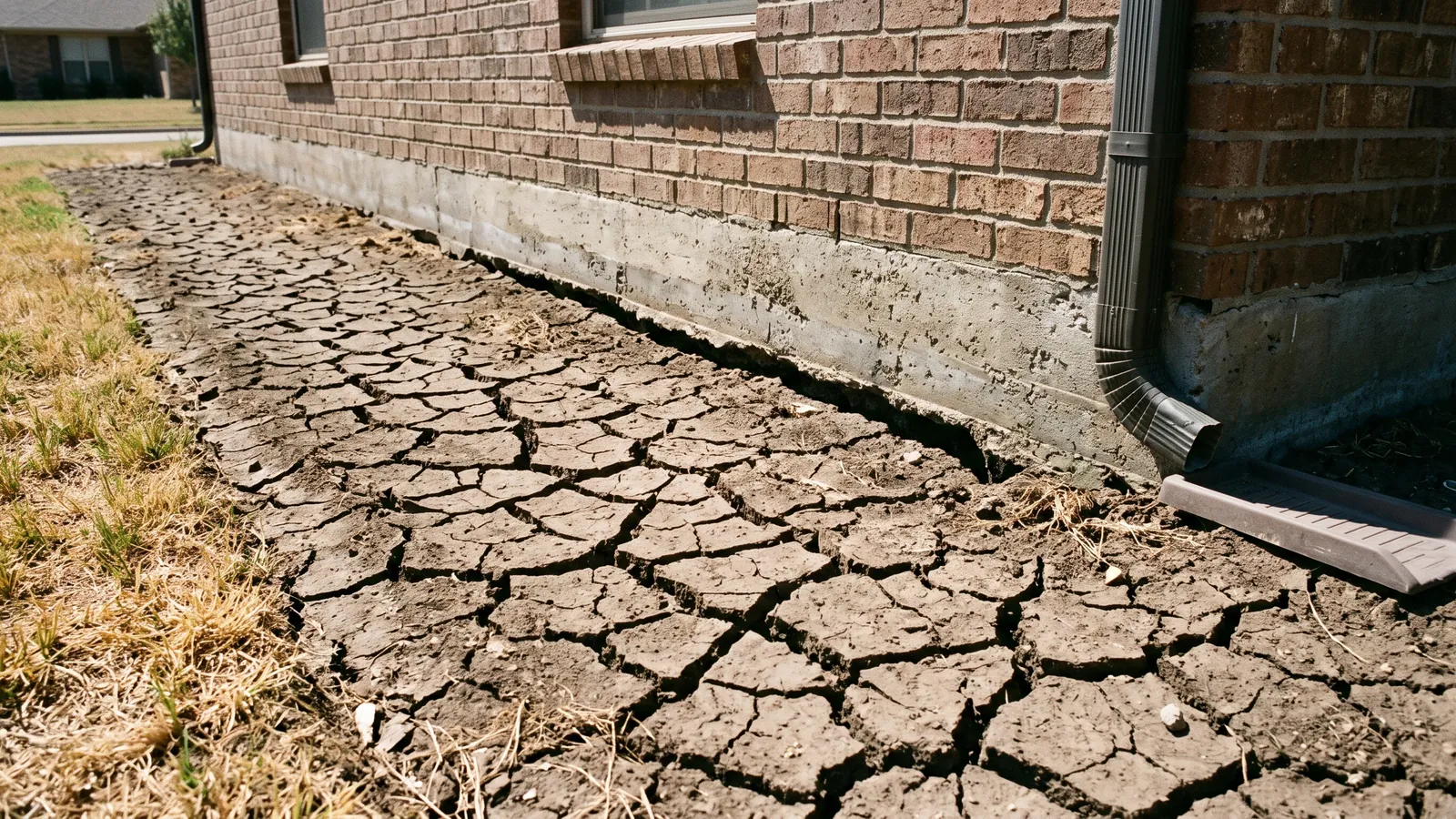
Montmorillonite is a clay mineral built in thin layers that soak up water between them. Wet, it swells; dry, it shrinks and cracks. The common soils across the metro carry a lot of it, with clay contents running from about 60 to 80 percent in the Wymore-Ladoga complex. That's why yards here crack into polygons in a dry August and turn to sticky mud in April.
The year under a foundation
- March to June: swell. Heavy spring storms soak the clay. It swells and pushes against basement walls, and the backfill along the foundation fills with water that presses on the wall and seeps in at the cove joint.
- July and August: shrink. With average highs around 90°F and dry spells, the clay gives up water, shrinks, and pulls away from the foundation. Soil under footings can shrink too, especially near big trees, letting a corner settle.
- Fall: the gap fills. The first heavy rains run straight down the gaps along the foundation to the footing.
- Winter: freeze-thaw. Average January lows near 20°F freeze the wet top layer of soil. Freezing water expands, adding pressure near the top of the wall.
Repeat that every year for 60 or 100 years and you get the cracks, bowing and settlement that keep us busy. Houses built in the 1950s and 60s on fill that wasn't compacted properly tend to show it soonest; newer homes in the southern suburbs, on the same clay, show it as their backfill settles.
What actually helps
- Move roof water away. Downspouts extended well past the backfill.
- Grade away from the house. The soil should fall away from the foundation for several feet.
- Keep moisture even. In a long dry spell, a soaker hose a foot or two from the foundation can reduce the summer shrink. Don't flood it.
- Watch big trees near the house. They pull a lot of water in summer.
- Drain what reaches the wall. Interior or exterior drains relieve pressure.
- Pier what's settling. Piers carry the load past the active clay to stable ground.
Quick questions
Can I stop the clay from moving?
Not entirely; it's a natural process. You can reduce the swing by managing water, which reduces how much it moves the house.
Should I water my foundation in summer?
In a long drought, gentle, even watering a short distance from the foundation can help. Don't water against the wall or let it pool.
Does a newer house avoid this?
Newer foundations are often better built, but they sit on the same clay and their backfill still settles. Drainage matters just as much.