Most foundations can be stabilized. A few walls need rebuilding. Here's the difference.
Full foundation replacement is rare. Repairs like piers, bracing and drainage handle the large majority of problems. But some walls are past saving, and it helps to know the signs.
When repair is the answer
Settlement that piers can catch; bowing that straps, anchors or braces can stop; cracks that injection can seal; water that drainage can handle. That covers most of what we see in Kansas City. Stabilizing a foundation keeps the house on its existing walls and costs a fraction of rebuilding.
When a wall should be rebuilt
- A block wall that has bowed so far it is shearing at the bottom, sliding inward off its footing.
- A wall that is leaning out of plumb enough that bracing would be holding up rubble.
- Block or stone crumbling through the full thickness, not just at the surface.
- Damage from a major event: a collapsed section, a vehicle impact, a failed retaining condition.
Rebuilding one wall means supporting the house, excavating outside, removing the failed wall, forming and pouring or laying a new one with proper drainage, and backfilling with gravel. It's a big job, usually $18,000 to $35,000 or more for one wall, and it needs a permit and often an engineer's design.
Old stone foundations
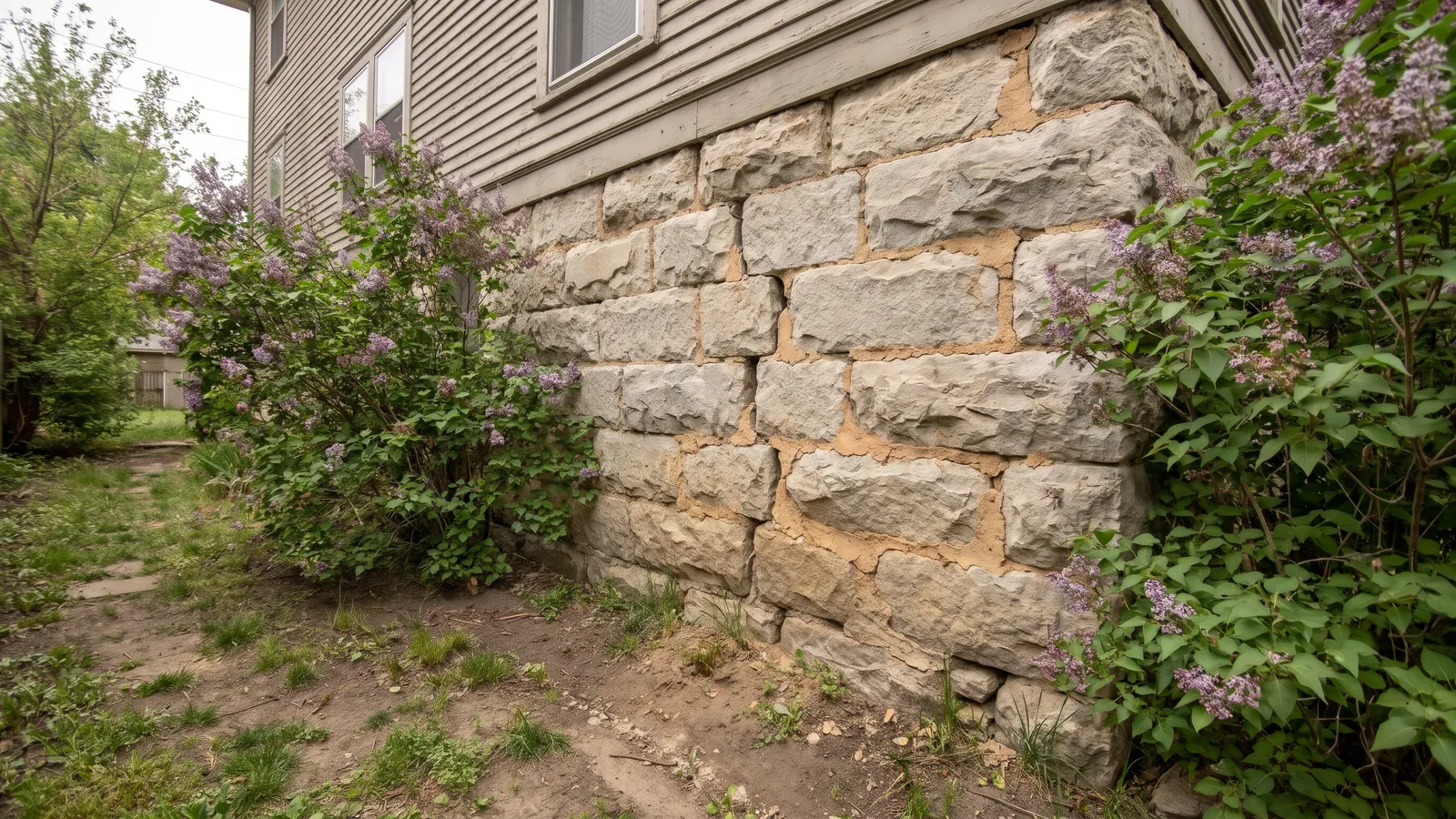
The rough-cut limestone and rubble foundations under many early-1900s houses in the city and Independence are a special case. They often look worse than they are. Washed-out lime mortar can be repointed, settled sections supported, and water managed. Full replacement under a lived-in house is rarely the best route; we'll tell you if yours is the exception.
When to call an engineer
Large or unusual movement, a commercial building, a wall rebuild, a lender or buyer asking for one, or a permit that requires a design. We can recommend engineers who know local soils, or work from your engineer's plan.
Quick questions
Is foundation replacement ever done on a whole house?
Rarely, and usually only on very old or badly damaged homes, or as part of major renovation. Stabilizing and rebuilding individual walls is far more common.
Can a bowed wall be straightened instead of replaced?
If it hasn't sheared at the bottom, wall anchors or adjustable braces can bring it back gradually over seasons.
How long does a wall rebuild take?
Typically one to two weeks, depending on length, depth, weather and inspections.